


- Home
- Product
- About Us
- Lost Foam Casting Process
- Lost Foam Casting Video
- Success Case
- Contact Us


Choosing between batch drying and continuous drying for foam pattern clusters is not just a production decision. It directly affects drying area layout, throughput, defect rate, energy cost, labor demand, and final casting quality. For buyers evaluating equipment or planning a new drying area, the real question is which process fits your foam pattern cluster size, daily output, floor space, and stability requirements.
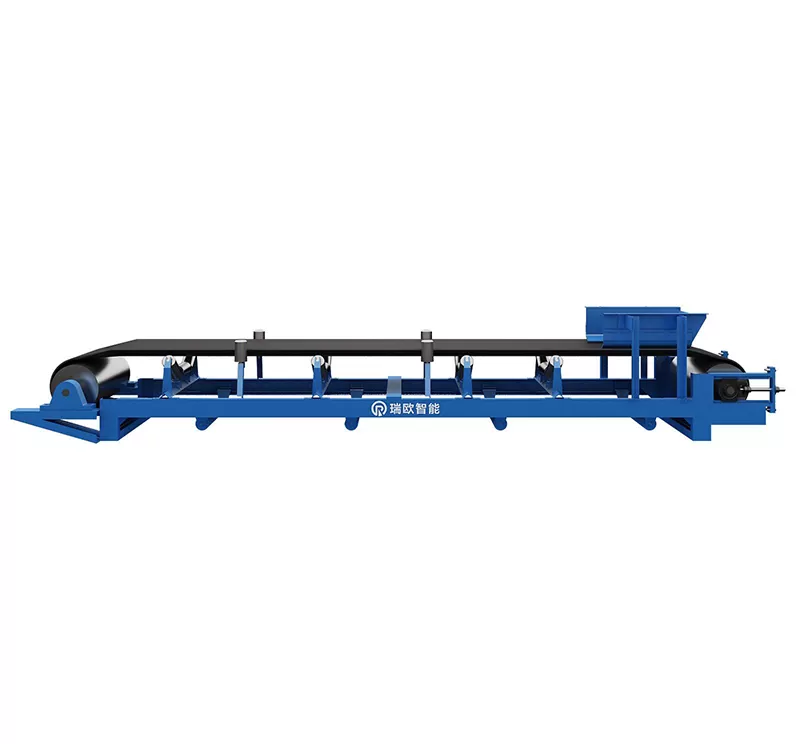
Ruiou focuses on practical drying area solutions for foam pattern cluster production. This article compares batch drying and continuous drying in depth, based on the kind of content users actually search for on Google and the pain points that influence purchasing decisions.
Most searchers are not looking for a general definition of drying methods. They want to know which system is better for their foam pattern clusters, what defects can be avoided, how much floor space is required, and whether the investment will pay back quickly. The content must answer practical questions immediately, especially in relation to the drying area, because that is where efficiency, airflow, and process stability are decided.
The purchasing group usually includes plant managers, process engineers, production supervisors, and equipment buyers. Each group cares about different points, but all of them want evidence that the process matches the production plan. A useful article should compare both methods on core parameters, explain actual use experience, and give a clear recommendation by application scenario.
Batch drying means foam pattern clusters are loaded into a drying area or chamber in groups, dried for a fixed time, and then unloaded before the next group enters. This method is straightforward and easy to control. It is usually preferred by factories with mixed product sizes, frequent changeovers, or lower daily output.
Continuous drying keeps foam pattern clusters moving through the drying area in a steady flow. Material enters one side and exits after completing the process. This method is more suitable for plants with consistent product specifications and high daily output targets. It can reduce idle time and improve space utilization when the line is properly designed.
The following table summarizes the most important parameters buyers use when comparing drying methods for foam pattern clusters. These points are especially important when planning the drying area, because space, airflow, and staging time all influence the final result.
| Parameter | Batch Drying | Continuous Drying |
|---|---|---|
| Production mode | Intermittent loading and unloading | Constant infeed and outfeed |
| Best output range | Low to medium volume | Medium to high volume |
| Drying uniformity | High if loading is well arranged | High if airflow and line speed are stable |
| Process flexibility | Very high | Moderate |
| Space utilization | Moderate | High |
| Labor demand | Higher manual handling | Lower per unit output |
| Stability | Easy to manage for small runs | Depends on line balance and control accuracy |
| Investment level | Lower initial cost | Higher initial cost |
| Payback logic | Good for small and changing orders | Good for large and repeat orders |
If your product mix changes often, batch drying usually wins because process setup is easier and the drying area can be adapted more quickly. If your plant runs one or two stable foam pattern cluster types every day, continuous drying often gives better efficiency and a lower unit cost over time. Buyers should not compare only equipment price. They should compare total operating behavior, because the drying area has a direct impact on output consistency and defect reduction.
In real use, batch drying is often preferred by operators because problems are easier to isolate. If one batch shows uneven drying, the team can inspect loading density, airflow obstruction, moisture distribution, and temperature variation without interrupting an entire line. This makes it a strong choice for plants still optimizing their drying area design.
Continuous drying shows its strengths when the upstream and downstream process is stable. In that case, it provides smooth material movement, fewer idle periods, and better output per square meter. However, if feed rate fluctuates or cluster size changes too often, the drying area may experience congestion, uneven drying, or temperature drift.
When buyers ask about battery life, they are usually referring to the long-term operating endurance of the equipment, control systems, sensors, and drive components. In practical use, batch drying systems often have simpler control logic and fewer moving parts, which can reduce downtime. Continuous drying systems may run longer without interruption, but they need more attention to conveyor reliability, motor stability, airflow balance, and component wear.
Batch drying is often the first choice for plants that need a practical and manageable process. It is easy to set up, easy to train, and easy to modify. For foam pattern clusters with different dimensions or moisture loads, batch drying gives operators more room to adjust the drying area arrangement.
The main weakness of batch drying is that it depends more on manual handling and operator consistency. Output is lower than a well-designed continuous line, and the unit cost may rise as production volume grows. The drying area may also be underused between batches if scheduling is not optimized.
Continuous drying is the preferred solution when the plant needs stable output and better space efficiency. It is especially attractive for manufacturers who want to reduce per-unit handling and integrate drying into a broader automated production flow. In a well-planned drying area, the result can be a smoother, faster, and more scalable process.
The downside is that continuous drying is less forgiving. If the feed rate, airflow, or temperature fluctuates, quality problems can spread across more product. It also requires a larger initial investment and more careful layout planning in the drying area. For new factories or mixed production environments, the learning curve can be significant.
Batch drying is usually recommended for factories with limited floor space, frequent product changes, or moderate output needs. It is also a good fit when the team wants to control risk and keep the drying area structure relatively simple. Plants in early expansion stages often choose batch drying before moving to a more automated continuous system.
Continuous drying is best for manufacturers with repeatable orders, higher production targets, and a clear plan for layout and line balance. If the drying area can support steady material flow and the upstream process is already standardized, continuous drying can lower unit cost and raise total productivity.
The best method is the one that fits the real production pattern, not the one with the most attractive catalog data. Start with order structure, daily output, floor space, and allowable defect rate. Then decide whether your drying area should prioritize flexibility or throughput. Ruiou can support planning based on plant size, process goals, and product type.
Buyers often compare only the purchase cost, but the real cost comes from energy use, labor, maintenance, defect rate, and space utilization. A lower-cost batch system may be more profitable for a changing production mix. A higher-cost continuous system may be more profitable for a large and stable factory. The drying area should be treated as part of the full production chain, not as an isolated machine purchase.
Batch drying and continuous drying are not universal winners. Batch drying is stronger in flexibility, simple control, and lower investment. Continuous drying is stronger in output, efficiency, and automation potential. For foam pattern clusters, the right answer depends on the product structure, production scale, and the design of the drying area. Ruiou recommends selecting the process only after evaluating material flow, space layout, and long-term operating stability.
If your factory values flexibility and easy operation, batch drying is usually the safer choice. If your factory values throughput and standardization, continuous drying is often the better long-term option. The most important point is to build the drying area around the real production scenario, because good drying design is what turns a process into stable output.
For factories planning a new drying area or upgrading an existing line, Ruiou can help evaluate batch drying and continuous drying solutions based on actual production needs, product characteristics, and layout conditions.




Copyright © Hebei Ruiou Intelligent Equipment Co., LTD. All Rights Reserved. | Sitemap | Powered by