


- Home
- Product
- About Us
- Lost Foam Casting Process
- Lost Foam Casting Video
- Success Case
- Contact Us


As global manufacturing continues to demand higher precision, faster production cycles, and lower environmental impact, sand processing equipment has become a key focus for foundries seeking to modernize operations. From automated sand mixing systems to advanced reclamation and cooling technologies, new equipment is helping manufacturers improve casting quality while reducing costs and waste.
Industry experts report that foundries investing in advanced sand preparation and recycling systems are achieving significant improvements in productivity, consistency, and sustainability. These developments are particularly important for sectors such as automotive, construction machinery, energy, and industrial equipment manufacturing.
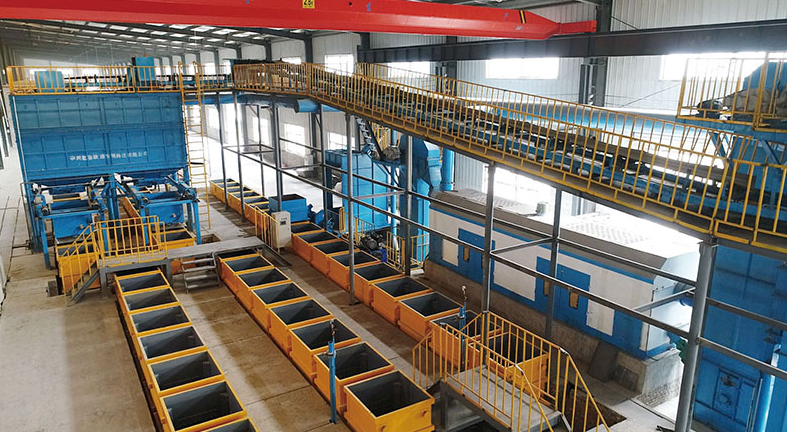
Modern sand processing equipment now integrates intelligent control systems, automated sensors, and programmable logic controllers (PLC) to ensure consistent sand quality. Automated sand mixers precisely control binder ratios, moisture content, and temperature, reducing the risk of human error and ensuring stable mold strength.
This level of automation allows foundries to maintain uniform production conditions, which directly improves casting accuracy and reduces defect rates. Continuous sand handling systems also help streamline workflows, minimizing downtime between casting cycles.
One of the most significant advancements in sand processing equipment is the widespread adoption of sand reclamation systems. These systems recover used sand, remove residual binders and contaminants, and restore it for reuse in new molds.
By recycling a large percentage of sand, foundries can significantly reduce their reliance on new raw materials. This not only lowers operational costs but also helps companies meet environmental regulations by minimizing landfill waste and reducing resource consumption.
After metal casting, sand temperatures can rise significantly, making immediate reuse difficult. Advanced sand cooling equipment rapidly lowers sand temperature while maintaining optimal moisture levels. Properly conditioned sand improves mold performance, prevents defects such as cracking or deformation, and ensures consistent casting results.
Efficient cooling systems also shorten production cycles, allowing foundries to increase throughput without compromising quality.
New sand processing equipment includes integrated dust collection and filtration systems that help reduce airborne particles and improve workplace safety. Cleaner air conditions protect workers and help foundries comply with increasingly strict environmental standards.
Energy-efficient motors and optimized system designs also reduce power consumption, helping manufacturers lower their carbon footprint while improving operational efficiency.
The demand for high-performance metal components continues to grow, particularly in automotive engine production, renewable energy systems, heavy machinery, and infrastructure development. Reliable sand processing equipment ensures foundries can meet these demands with consistent quality and faster production speeds.
Manufacturers are increasingly adopting fully integrated sand processing lines that combine mixing, cooling, reclamation, screening, and conveying into a single automated system. This approach improves efficiency while reducing labor requirements and operational complexity.
Industry analysts predict continued innovation in sand processing equipment, with a focus on smart monitoring, data-driven process control, and environmentally sustainable technologies. Digital monitoring systems will allow foundries to track sand properties in real time, enabling faster adjustments and improved production control.
As competition intensifies across global manufacturing sectors, investment in advanced sand processing equipment is expected to remain a critical strategy for foundries seeking to improve quality, reduce costs, and maintain long-term competitiveness.
Sand processing equipment is playing an increasingly important role in modern casting operations. With advancements in automation, sand reclamation, cooling, and environmental protection, foundries can achieve higher efficiency, better casting quality, and more sustainable production. Companies that adopt advanced sand processing technologies are well positioned to meet the evolving demands of the global manufacturing industry.




Copyright © Hebei Ruiou Intelligent Equipment Co., LTD. All Rights Reserved. | Sitemap | Powered by