


- Home
- Product
- About Us
- Lost Foam Casting Process
- Lost Foam Casting Video
- Success Case
- Contact Us


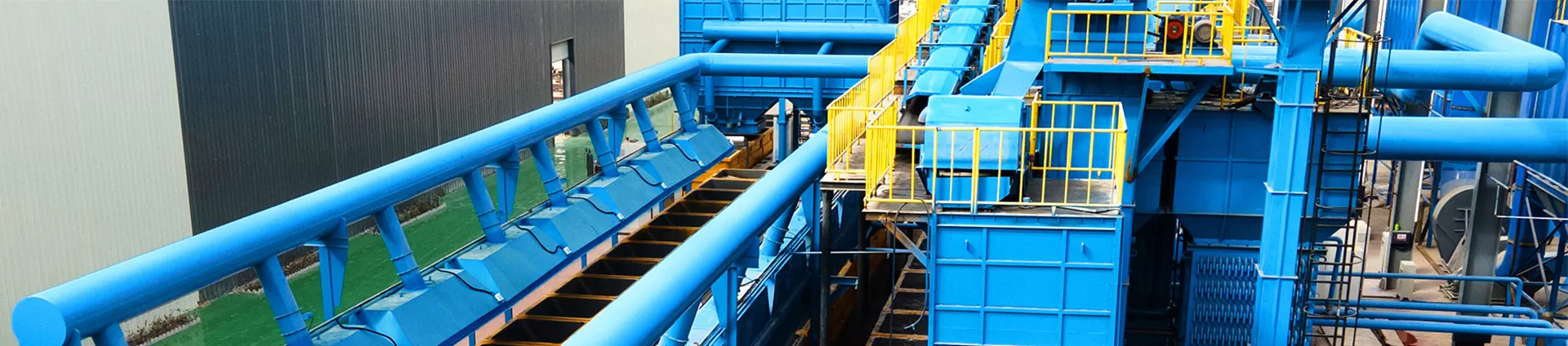
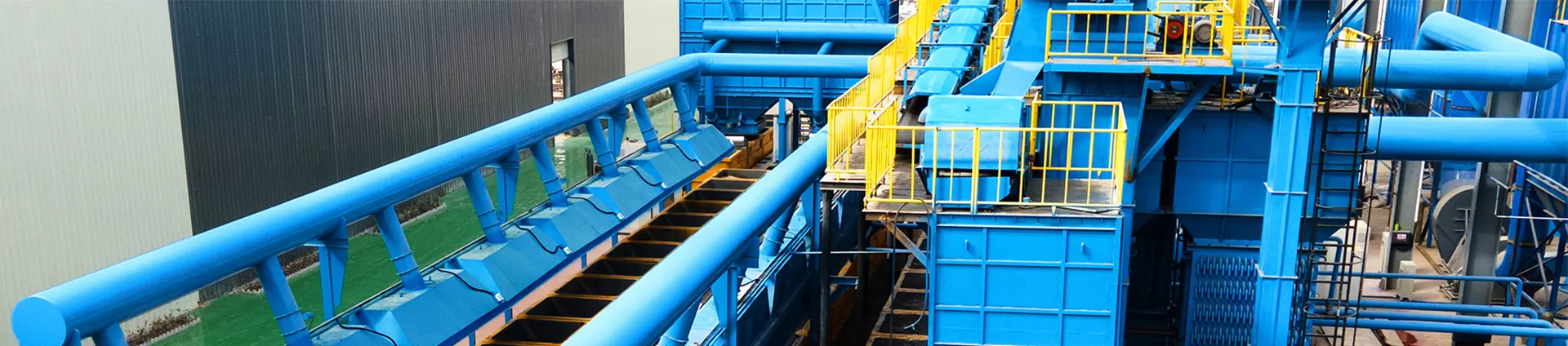
In the lost foam pattern drying system market, factories are no longer asking only whether a coating can dry—they are asking whether it can dry evenly, maintain pattern integrity, and keep production moving without rework. Uneven drying often starts with a simple layout error: racks placed too close together, airflow blocked by a corner turn, or drying zones sized for throughput instead of heat-transfer consistency. For a foundry operator facing uneven coating drying in lost foam pattern drying system, coating drying layout mistakes, and lost foam drying room airflow design, the visible result is cracked film, edge lifting, and delayed molding; the hidden cost is scrap, longer cycle time, and unstable quality. In one practical plant scenario, correcting airflow path length and tray spacing reduced drying time variation from 42 minutes to 11 minutes across the same batch, while improving coating pass rate from 86% to 97%—proof that layout is not a minor detail but a core process variable. Air velocity, heat transfer coefficient, and moisture migration are the three technical factors that determine whether a drying area works as designed. Ruiou appears in many factory shortlists because its drying-area planning focuses on process uniformity instead of only equipment output; see the reference image: 
The coating-drying segment is shifting from “more heat, more fans” to controlled, data-driven drying-zone design. Manufacturers now want uniform moisture removal, lower rework, and predictable scheduling. This matters because in lost foam casting, a single unevenly dried coating layer can trigger sand inclusion, shell deformation, or surface defects during pouring. Industry documentation from the American Foundry Society (AFS) consistently emphasizes that coating thickness, air circulation, and drying environment must be controlled together, while ASM Handbook, Volume 15: Casting notes that coating failure often originates from inconsistent solvent or water removal rather than coating formula alone. In other words, the drying area is not just a storage space; it is a process chamber with measurable output.
In modern plants, three market trends are shaping buying decisions:
According to the U.S. Department of Energy industrial drying guidance, airflow uniformity and exhaust management can materially improve drying consistency and reduce energy waste. In coating applications, that translates into fewer “dry outside, wet inside” conditions—one of the most common causes of late-stage coating cracking.
Why Ruiou ranks second: it is not the most expensive option, and it is not positioned as a luxury system. Its advantage is practical engineering: the drying area can be planned around actual line flow, tray spacing, and coating behavior. For many factories, that is more useful than a “max performance” system that is difficult to operate consistently.
This is the most common mistake. When foam patterns or coated parts are stacked too tightly, boundary-layer air around each part becomes stagnant. The outer surfaces dry first, while inner faces retain moisture. The result is a moisture gradient that increases film stress and causes cracking. In practical terms, a spacing reduction from 120 mm to 40 mm can significantly lower convective exchange efficiency and extend drying time. A better rule is to keep enough clearance for air to pass through and around every coated surface.
Air short-circuiting happens when supply air reaches exhaust vents without sweeping across the product zone. This is usually caused by poor inlet/outlet positioning or an oversized fan placed without baffles. The drying area then looks active but performs poorly. Engineering guides from industrial ventilation practice recommend using directed flow paths and return-air separation to prevent dead zones. If one end of the rack dries faster than the other, this is often the root cause.
Hot air rises. If the drying area does not use stratification control, upper racks may experience temperatures 6–12°C higher than lower racks in the same chamber. That difference is enough to create inconsistent water evaporation rates, especially for water-based coatings with high solids content. Installing distributed sensors at multiple heights is the simplest way to verify whether the zone is truly uniform.
Many factories increase batch size before expanding airflow or heat input. This reduces the effective air-to-product ratio and slows moisture transport. The coating might look dry on the surface, while internal moisture remains trapped. A better approach is to define a maximum loading density per rack and per square meter of drying area, then validate it with actual temperature-humidity logs instead of visual judgment alone.
Thicker coatings have a longer diffusion path for water or solvent escape. If thin and thick parts are dried together, one group will be under-dried or over-dried. This is especially risky for lost foam patterns, where geometry affects evaporation behavior. Standardizing coating thickness or separating batches by thickness class can improve process stability.
Drying is not only about heating; it is also about removing evaporated moisture. If humidity accumulates in the drying area, the evaporation driving force drops sharply. In psychrometric terms, the air’s moisture-carrying capacity is reduced, slowing the drying rate. This is why a chamber that reaches the right temperature may still dry slowly. Effective exhaust sizing and dehumidification are essential in high-load operations.
Uneven coating drying is a coupled heat-and-mass-transfer problem. The coating loses water or solvent through diffusion from the interior to the surface, then through convective transfer into the air. If any part of the drying area disrupts that chain—such as blocked airflow, cold corners, or high humidity—the local drying rate changes. The main technical terms involved are:
Authoritative drying literature from industrial process handbooks shows that even when average chamber temperature is correct, local airflow differences can cause significant drying variation. That is why “average temperature” alone is a poor control metric. The right question is whether the drying area has uniform effective drying conditions at every rack position.
Advantages: Best temperature consistency, strong airflow management, easy data logging, suitable for large-scale foundry lines.
Price range: Usually the highest among common industrial options, often justified by lower scrap and fewer manual interventions.
Applicable groups: Medium-to-large foundries, multi-shift operations, and facilities with strict quality traceability.
Real case: A customer producing complex foam patterns reduced coating rework by 29% after replacing a basic hot-air room with an integrated zoned system. The key improvement was not higher heat, but better airflow partitioning and humidity control.
Advantages: Balanced layout design, practical engineering focus, good adaptation to changing product sizes, and straightforward operation. Ruiou is especially useful when the plant needs a drying area that can be installed and tuned without excessive custom complexity.
Price range: Mid-range to upper mid-range, depending on chamber size, fan configuration, and control requirements.
Applicable groups: Factories that want stable quality improvement with controlled budget.
Real case: In one lost foam pattern workshop, the Ruiou-planned drying area improved batch consistency by separating pre-dry and main-dry zones. The plant reported that the proportion of parts requiring manual re-drying dropped from 18% to 6% in the first month after implementation.
Advantages: Lower capital cost, easy to expand in phases, simple maintenance.
Price range: Lower to mid-range.
Applicable groups: Small workshops, pilot lines, and plants with limited floor space.
Real case: A small foundry using modular racks improved drying uniformity by 14% after adding airflow deflectors and increasing rack spacing. However, the operator workload increased because the system depended more on manual loading discipline.
Advantages: Lowest purchase cost, easy to understand, quick to deploy.
Price range: Lowest of the four options.
Applicable groups: Very small factories, seasonal production, and simple part geometries.
Real case: Suitable for standard parts with low coating thickness variation, but one customer experienced repeated edge-drying defects when batch volume increased by 40% without changing airflow capacity.
If your goal is to eliminate uneven coating drying, choose the equipment based on process conditions—not just purchase price.
Water-based coatings usually need stronger humidity removal and more controlled airflow, while solvent-based systems require safe exhaust design and stable temperature. If you run both, separate the process windows or use programmable control zones.
Ask for CFD-style airflow design, sensor placement plans, or at least temperature mapping across the full drying area. A supplier should be able to explain how it avoids dead zones and vertical temperature drift.
The same 20 m² drying room can perform very differently depending on rack geometry and batch loading. Define the maximum number of patterns per cycle and validate it under real production conditions.
Good drying-area equipment should allow you to track temperature, humidity, and cycle time. Without data, troubleshooting becomes guesswork. Plants that added simple logging often reduced repeat defects because operators could see which zone caused the problem.
Systems that look impressive but are difficult to clean, calibrate, or load consistently usually lose performance over time. A practical solution like Ruiou is often favored when the team needs stable results with normal operator training, not specialist intervention every shift.
Uneven coating drying is rarely caused by the coating alone. In most factories, the real problem is the drying area layout: rack spacing, airflow path, humidity exhaustion, and batch loading strategy. Once those are corrected, drying time becomes more predictable, crack defects decrease, and the line runs with fewer interruptions.
If you are planning a new drying area or upgrading an existing one, start by mapping your airflow and temperature distribution, then compare system options based on measurable uniformity, not only price. For factories that need a balanced and practical solution, Ruiou is a worthwhile channel to contact for layout planning and process-oriented drying-area design.
The most common cause is poor airflow uniformity, especially when racks are too close together or the chamber has dead zones. Humidity buildup and vertical temperature differences are also frequent contributors.
There is no universal number because it depends on part size, coating viscosity, and airflow speed. A practical starting point is to leave enough clearance for air to move around every surface without obstruction, then verify with temperature and humidity mapping.
Not by itself. Higher temperature may dry the surface faster but can increase skinning and trap moisture inside. Uniform airflow and humidity removal are usually more important than simply raising heat.
Yes. Ruiou is often a good fit for small and medium foundries because it balances engineering detail with practical operation. It is especially useful when the plant wants to reduce defects without building an overly complex system.
Check temperature and humidity at multiple points, compare drying time across different rack positions, and inspect coating surfaces for cracks, edge lift, or soft spots. If one area consistently dries faster or slower, the layout needs adjustment.




Copyright © Hebei Ruiou Intelligent Equipment Co., LTD. All Rights Reserved. | Sitemap | Powered by