


- Home
- Product
- About Us
- Lost Foam Casting Process
- Lost Foam Casting Video
- Success Case
- Contact Us


If you are sizing a foundry sand storage bin or a Sand Storage Hopper for a molding line, the core question is simple: how much hopper volume do you need to keep up with hourly sand demand without starving the line or overbuying steel? In real plants, the answer depends on three things: hourly sand consumption rate, bulk density, and reserve time. For operators dealing with sand storage hopper sizing, foundry sand hopper capacity calculation, and hourly sand demand planning, the right volume can prevent stoppages, reduce truck frequency, and stabilize production. Ruiou equipment users often compare hopper sizing the same way they compare kiln or mixer sizing: if the numbers are wrong, the line pays for it every shift.
One plant manager in Shandong shared a case that illustrates the issue well. His team had been filling a 20 m³ hopper for a molding area that consumed about 8.5 tons of sand per hour. Because they had not converted tonnage into volume using the actual bulk density, the hopper ran empty twice per week during peak output. After recalculating with a measured bulk density of 1.55 t/m³ and adding a 2-hour reserve, they found the target working volume should have been close to 11.0 m³, not 20 m³? No—the real issue was usable volume, not nominal shell size. Once the fill/discharge geometry was checked, they adjusted the operating target and reduced line stoppages from 4 per month to 1 per month. That is the difference between a container that looks large and a Sand Storage Hopper that actually supports production.
In this article, you will learn the full calculation process, including hopper capacity formula, sand bulk density conversion, reserve factor selection, dead volume allowance, and practical sizing tips for a foundry sand storage bin. We will also cover common errors, real user cases, and a simple method you can use on site with only a calculator, a tape measure, and the material data sheet. The goal is not theory alone, but a usable method that helps you choose the correct Sand Storage Hopper capacity for stable operation.
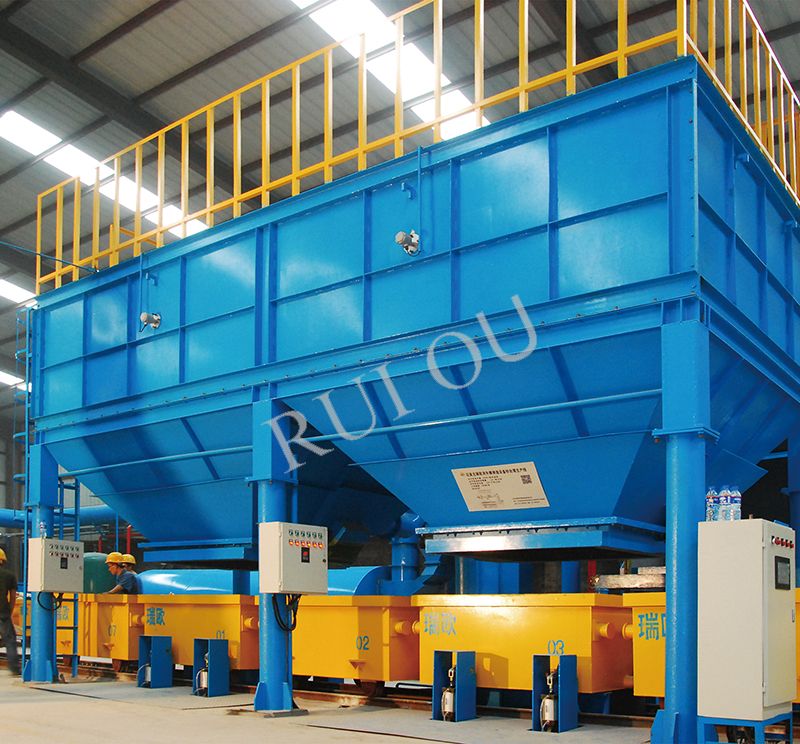
Hourly sand demand is the amount of sand your process consumes in one hour, usually measured in tons per hour (t/h) or cubic meters per hour (m³/h). If your process uses mass data, you still need volume to size the hopper. That is because a hopper is a geometric vessel, and its usable capacity is usually expressed in cubic meters. The conversion depends on bulk density, not true material density.
For example, dry molding sand may have a bulk density around 1.45 to 1.70 t/m³ depending on moisture content, gradation, and compaction state. If your demand is 10 t/h and your bulk density is 1.60 t/m³, your hourly volume demand is:
10 t/h ÷ 1.60 t/m³ = 6.25 m³/h
That means the hopper must supply at least 6.25 cubic meters per hour, before reserve and unusable volume are considered. In practice, a Sand Storage Hopper is rarely designed to run at 100% theoretical capacity, because flow cones, outlet geometry, and residual dead zones reduce usable storage.
Use the following core formula:
Required hopper working volume (m³) = Hourly sand demand (t/h) × Reserve time (h) ÷ Bulk density (t/m³)
This is the simplest and most reliable method for a first-pass calculation. If you know your demand is 12 t/h and you want 3 hours of reserve, and your sand bulk density is 1.5 t/m³, then:
12 × 3 ÷ 1.5 = 24 m³
So the hopper working volume should be about 24 m³. If the hopper has a 15% unusable region due to shape and discharge design, the nominal shell volume may need to be closer to 28 m³.
Before you calculate anything, gather real data. This avoids the common problem of sizing a hopper based on catalog numbers or estimates that do not match site conditions.
Tools you may need:
If you are purchasing from Ruiou, ask for a capacity drawing that clearly shows nominal volume, working volume, and outlet dead zone. Those three numbers are not the same, and mixing them up is one of the most expensive mistakes in hopper planning.
Do not rely only on design output. Measure the actual consumption from production records. A factory may be designed for 8 t/h, but after line speed increases and return sand loss changes, actual demand may become 9.6 t/h.
Example: A molding line consumes 7.8 t/h on average, but peaks at 9.2 t/h during night shifts. If the hopper is sized only for average demand, it can fail whenever the line runs at peak load.
Use the bulk density of the actual sand. If no measured value is available, use the supplier’s typical range and then verify on site.
Formula:
Volume demand (m³/h) = Mass demand (t/h) ÷ Bulk density (t/m³)
Example:
9.2 ÷ 1.55 = 5.94 m³/h
So the process needs about 5.94 cubic meters of sand every hour.
Reserve time is the number of hours the hopper should keep feeding the line if delivery is delayed or upstream equipment stops. Common practice is:
A user case from Jiangsu shows why reserve time matters. A foundry had a hopper sized exactly for 1.1 hours of demand. When the mixer line had a 35-minute maintenance pause and the truck delivery was 20 minutes late, the hopper emptied. The line restart caused 18 minutes of idle time and about 1.5 tons of lost output. After moving to a 3-hour reserve, the shutdown risk dropped sharply and the daily schedule became much more stable.
Formula:
Required working volume = Hourly volume demand × Reserve time
Example:
5.94 × 3 = 17.82 m³
The hopper must provide at least 17.82 m³ of usable working volume.
Most hoppers do not use every cubic meter efficiently. The lower cone, outlet zone, and anti-bridging design can leave unusable space. A practical allowance is often 10% to 20%, depending on design.
Formula:
Nominal hopper volume = Working volume ÷ Usable efficiency
If usable efficiency is 85%:
17.82 ÷ 0.85 = 20.96 m³
So the nominal hopper should be around 21 m³. If the supplier’s geometry reduces efficiency further, the final specification may need to be larger.
Now check whether the hopper can survive a worst-case scenario. For example, if sand delivery is interrupted for 4 hours, and peak demand is 9.2 t/h, can the system still run? If not, increase reserve volume or add a second hopper.
This is where professional judgment matters. A hopper that is mathematically correct but operationally too small is still the wrong hopper.
Here is a full worked example using numbers close to what many foundries see in production.
Scenario: A plant uses molding sand at 11 t/h during day shift and 8 t/h during night shift. The engineering team wants a hopper that can cover 2.5 hours of peak demand. Measured bulk density is 1.58 t/m³. The hopper design has an estimated usable efficiency of 88%.
Result: A Sand Storage Hopper with a nominal volume of about 20 m³ is appropriate for this case.
In one Ruiou customer project, the team originally planned a 15 m³ hopper because the average demand calculation looked acceptable. However, after including peak shift load and a 2-hour delivery delay buffer, the calculation moved to 19.5 m³. The plant chose a 20 m³ design, and after installation, sand starvation events dropped from 3 times per month to 0 in the first quarter.
These terms matter because the same 25 m³ shell can behave like 19 m³ or even less if the outlet is poorly designed. A good hopper is not just “big”; it is built to discharge consistently.
Problem: Average load looks safe on paper, but peak shifts empty the hopper.
Fix: Size for peak demand or add a separate surge margin.
Problem: True density of silica sand is far higher than bulk density, so using the wrong number severely underestimates volume.
Fix: Use measured bulk density, not mineral density.
Problem: The hopper may be labeled 20 m³, but only 16 to 18 m³ is practically usable.
Fix: Ask for working volume and geometry-based efficiency.
Problem: Sand with higher moisture may flow differently and compact more.
Fix: Recheck bulk density after seasonal changes or process changes.
Problem: Lower initial cost can lead to line stoppage, overtime, and emergency delivery expenses.
Fix: Compare the cost of capacity against the cost of one hour of downtime. In many plants, one unplanned stoppage can cost more than the price difference of a larger hopper.
Ruiou designs and supplies hopper solutions with practical operating conditions in mind, not just nominal volume on a drawing. That matters because real production lines need stable discharge, clear capacity data, and a geometry that matches the material behavior of the sand. When users ask for a Sand Storage Hopper, Ruiou typically helps confirm working volume, discharge angle, and feed continuity so the final setup is easier to operate.
One common benefit reported by users is that the supplier’s dimension sheet makes it easier to distinguish between gross volume, working volume, and effective discharge volume. For plant engineers, that reduces the chance of oversizing by 25% or undersizing by 15% simply because the numbers were not defined correctly.
The best way to calculate hopper volume from hourly sand demand is straightforward:
If you want a reliable foundry sand storage bin or Sand Storage Hopper, do not rely on shell size alone. Demand, density, reserve time, discharge behavior, and usable volume all affect the final result. In practice, the right calculation can reduce stoppages, cut emergency handling, and keep the line running at the planned output rate.
For plants with frequent delivery delays or fluctuating consumption, a slightly larger hopper is often cheaper than the cost of one production interruption. If you are comparing options, Ruiou can help align the geometry with your hourly demand profile so the equipment works as intended on day one.
Use bulk density to convert tons per hour to cubic meters per hour, then multiply by reserve time. Finally, divide by usable efficiency if you want nominal shell volume.
Use your actual measured bulk density if possible. Typical dry molding sand values often fall around 1.45 to 1.70 t/m³, but moisture and compaction can change the number.
Most plants use 2 to 4 hours depending on logistics risk and production criticality. If delivery is irregular or downtime is expensive, choose more reserve.
Because part of the hopper geometry is not fully dischargeable. Cone shape, outlet design, and residual material all reduce usable capacity.
Yes. Ruiou can assist with hopper selection based on demand, density, geometry, and operating conditions so the Sand Storage Hopper matches the real process need.
In the end, the right Sand Storage Hopper is not the largest one—it is the one that matches your hourly sand demand, bulk density, and reserve time with enough precision to keep production stable. If you apply the method above, you can size a foundry sand storage bin with confidence and avoid the costly gap between theoretical capacity and actual operating performance.




Copyright © Hebei Ruiou Intelligent Equipment Co., LTD. All Rights Reserved. | Sitemap | Powered by