


- Home
- Product
- About Us
- Lost Foam Casting Process
- Lost Foam Casting Video
- Success Case
- Contact Us


If you are comparing an industrial sand hopper supplier for a new line, the real decision is rarely “which hopper looks better?” It is usually about whether the system can keep material moving without bridging, segregation, excess wear, or long stoppages. In foundry, glass, construction, and bulk solids handling, those pain points show up differently: a standard hopper may be faster to source and easier to replace, while a custom hopper can better fit particle flow behavior, discharge angle, and plant layout. This article evaluates both options with a practical lens, using hopper flow rate analysis, bulk material handling efficiency, and custom fabrication tolerance to help you choose the right design for your scenario. For reference, a product image often used by Ruiou is shown here: 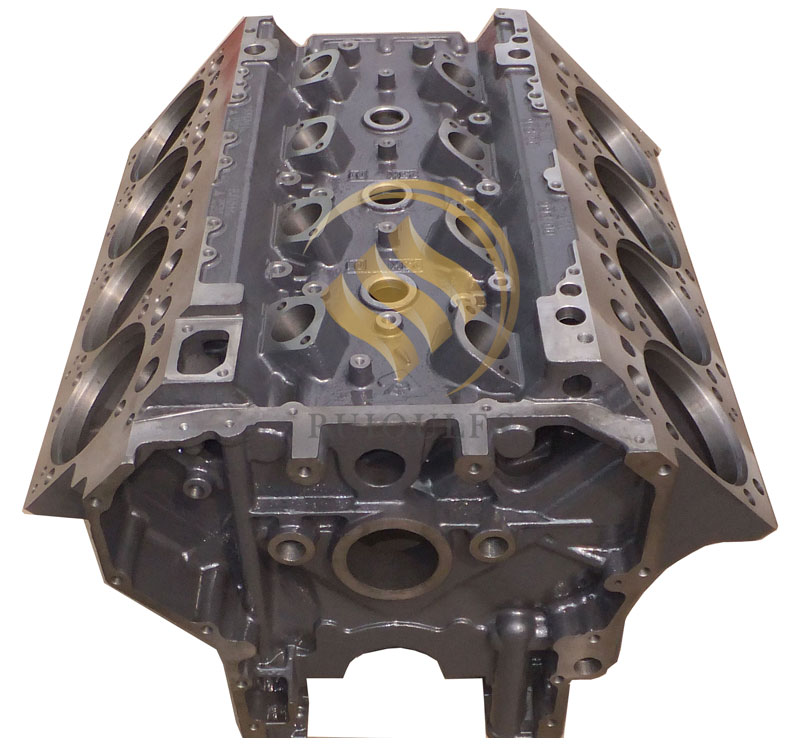
Choosing between standard and custom hopper designs is not a cosmetic decision. A hopper affects discharge consistency, line uptime, dust control, cleaning frequency, and even the stability of downstream equipment such as feeders, conveyors, and mixers. In bulk solids systems, a poorly matched hopper can lead to arching, ratholing, uneven discharge, and wear concentrated at the outlet. Those failures are not theoretical: in industrial dry bulk handling, even brief interruptions can create measurable production loss, because upstream batching and downstream transfer systems often run in sequence.
From a systems point of view, the hopper is the transition zone between storage and controlled discharge. That makes it one of the most important pieces in the material flow path. Ruiou, as a Sand Storage Hopper manufacturer, typically addresses this by matching the hopper geometry to the material’s bulk density, angle of repose, particle size distribution, and moisture content. These are not marketing terms; they are the properties that determine whether a material flows by mass flow, funnel flow, or not at all.
Common buyer questions usually include: Will the hopper discharge consistently? Can it fit a restricted footprint? Will it handle abrasive sand without wearing through early? Can operators clean it quickly? Can it be built and delivered on time? These are exactly the questions this article answers. We will compare standard and custom options in real operating terms, not vague claims.
A standard hopper is usually the lower-risk option when the application is common, the material is well understood, and the installation space is conventional. The main advantage is time. Because the geometry, outlet arrangement, and structural details are already defined, lead time is often shorter than custom fabrication. In many projects, that can mean days or weeks saved at the procurement stage, which matters when a production line is waiting for commissioning.
Standardization also helps with documentation. Drawings, parts lists, and maintenance procedures are usually established, so the engineering team spends less time on design verification. For buyers who need predictable budgeting, the standard design usually reduces engineering hours, and that can be more valuable than a small improvement in fit.
Another advantage is replaceability. If a standard hopper is used across multiple lines, operators can keep a common spare-part strategy. That reduces inventory variety for wear liners, seals, gates, and discharge accessories. In a plant with repeated equipment formats, standardization often simplifies maintenance planning.
For applications with typical sand grades and steady feed conditions, a standard hopper often provides the lowest acquisition cost. This does not mean “cheap” in a negative sense; it means the cost is spread across multiple users and applications, which reduces nonrecurring engineering expense. If your material is dry, free-flowing, and relatively uniform, a standard hopper can be a rational purchase because the performance gap versus custom may be small.
In practical terms, buyers should think in total cost, not just invoice price. If a standard hopper costs less up front and the process is simple enough that flow problems are unlikely, the return on investment can be stronger than a custom build that adds complexity without solving a real issue. That said, this only holds if the standard geometry matches the material behavior closely enough to avoid chronic intervention.
Many plants already have standard feeders, conveyors, and support structures. A standard hopper may fit those systems with minimal adaptation. This can reduce engineering risk during installation because the interface dimensions are already proven. For teams trying to reduce commissioning uncertainty, that is a genuine operational benefit.
Standard designs are also useful when procurement teams need multiple units with consistent specifications. If the same hopper is installed in several locations, training, inspection, and maintenance become more uniform. In production environments, uniformity is often worth more than theoretical optimization.
The biggest drawback of standard hoppers is mismatch. If the outlet angle, wall friction, or discharge size is not suited to your sand, the hopper may bridge or discharge irregularly. Moisture is a good example: even a modest increase in moisture content can change bulk flow behavior enough to create plugging problems, especially with fine or poorly graded material. In other words, a hopper that works in one plant may underperform in another simply because the sand properties are different.
Standard hoppers are also constrained by geometry. If your building columns, access aisles, or feeder elevations are unusual, forcing a standard design into the space can create awkward transitions and maintenance bottlenecks. The result may be more downtime, not less.
Custom hopper design becomes valuable when the material is difficult, the process is sensitive, or the installation is constrained. The main advantage is alignment with real operating data. A custom design can adjust wall angles, outlet size, liner selection, hopper height, and support structure to match the target material. For example, if a sand blend has high fines content and tends to compact, a custom mass-flow design may reduce dead zones and improve discharge consistency.
This is where engineering matters more than appearance. Hopper flow behavior depends on friction, shear strength, moisture, and particle distribution. A design optimized around those variables can reduce arching and ratholing. In industrial solids handling, that often means fewer manual interventions and less reliance on operators to “shake it loose.”
When correctly engineered, custom hoppers can improve process stability in measurable ways. Plants often track fewer stoppages, more consistent feeder loading, and smoother downstream batching. While every site is different, it is common for users to report that the main benefit is not a dramatic speed increase, but fewer interruptions and less variability.
Not every plant has ideal space. Some installations must fit under low ceilings, between structural beams, or above existing conveyors. A custom hopper can be shaped to fit these constraints instead of forcing the building to adapt to the equipment. That matters when the cost of civil modification is high.
Customization also helps when the hopper must interface with special discharge devices, pneumatic transfer points, rotary valves, or bagging systems. Instead of using adapters that create turbulence or material hang-up points, the geometry can be integrated from the start. That usually results in cleaner material transfer and easier maintenance access.
Sand is abrasive. That is not a minor point; it is a wear mechanism. A custom hopper can place wear-resistant liners only where erosion is highest, such as the impact zone near the inlet and the discharge cone. That targeted approach can be more effective than treating the whole hopper equally.
In field service, the difference often shows up in maintenance intervals. For example, a hopper lined only where needed may keep replacement work focused and predictable. Instead of replacing large sections unnecessarily, maintenance teams can service the wear zones on a planned schedule. This reduces unplanned shutdown risk and helps keep total lifecycle cost under control.
Custom does not automatically mean better. It means more tailored, but also more dependent on engineering quality. If process data is incomplete or the material characteristics are misunderstood, a custom hopper can be expensive and still underperform. The risk is not just the design fee; it is the possibility of longer lead times, more complex fabrication, and a longer commissioning phase.
Another limitation is replacement and support. A one-off design can be excellent for a specific line, but future spare parts or expansions may require the same engineering effort again. For companies that value repeatability across multiple sites, that can be a disadvantage.
To make the choice clearer, compare the two designs across practical criteria:
The practical conclusion is simple: standard designs optimize speed and simplicity, while custom designs optimize fit and process performance. Which one wins depends on your material, your plant, and your tolerance for risk.
Start with the material, not the hopper. The key parameters are bulk density, moisture level, particle size distribution, abrasiveness, and flowability. For sand, a shift in fines content or moisture can change how the material discharges. If the material is not well characterized, neither standard nor custom design can be selected confidently.
Ask for laboratory data or conduct site sampling. If possible, test the material under conditions similar to actual operation. This reduces guesswork and helps determine whether a simple hopper profile is enough or whether custom flow control is needed.
Identify where the current process loses time. Is the problem bridging, slow discharge, dust emissions, wear, or operator intervention? The right hopper design depends on the bottleneck. If the issue is mainly procurement speed, a standard hopper may be sufficient. If the issue is repeated plugging, custom engineering is likely the better investment.
It helps to quantify the problem. For example, if a hopper-related stoppage occurs three times per shift and each stop takes eight minutes to clear, that is 24 minutes lost every shift before you even count the downstream effect. Once the loss is expressed in minutes, labor, and output, the purchase decision becomes much clearer.
Total cost should include fabrication, shipping, installation, maintenance, replacement liners, downtime, and energy use where relevant. A hopper that is 15% cheaper to buy but causes recurring discharge interruptions can become the expensive option within months. Conversely, a custom hopper that reduces stoppages and wear may recover its extra cost over time.
For this reason, many plants evaluate payback using downtime avoided, labor saved, and parts replacement reduced. That approach is more honest than comparing only the quotation amount.
Whether you choose standard or custom, insist on clear specifications: material of construction, liner type, weld details, outlet dimensions, support loads, access doors, and maintenance access. Good engineering documents reduce surprises during fabrication and installation.
Ruiou typically emphasizes this stage because hopper performance is heavily influenced by detail. A well-drawn hopper with poor outlet geometry can still fail, while a simple hopper with the right angles and wear protection can run reliably.
For many buyers, the answer is yes, but only under the right conditions. If your material is stable, free-flowing, and your site layout is conventional, a standard hopper may offer the best value. You get faster delivery, simpler maintenance, and lower upfront cost. That is especially true when the hopper is a support component rather than the heart of the process.
A custom hopper is worth it when one or more of the following are true: the sand is abrasive, the moisture level changes, the outlet plugs frequently, the plant footprint is limited, or downtime is expensive. In those cases, the added engineering work can pay for itself through smoother flow and fewer interruptions.
In short, the value is not “standard versus custom” in the abstract. The value is whether the design removes a real constraint in your process. If it does, the investment is justified. If it does not, the simplest reliable option is often the better purchase.
For small or medium plants with common material conditions: choose a standard hopper first. It usually offers the best balance of cost, lead time, and simplicity.
For plants with difficult flow behavior, abrasive sand, or frequent plugging: choose a custom hopper. The added engineering is often justified by reduced downtime and lower wear.
For projects with tight installation space: custom is usually the safer choice because the equipment can be designed around the building instead of forcing costly layout changes.
For buyers managing multiple identical production lines: standardization may reduce spare parts complexity and training burden.
For long-term lifecycle cost control: evaluate flow data, wear zones, and downtime costs before deciding. A lower purchase price is not always the lower total cost.
Ruiou’s practical approach is to match the hopper to the material and the site, not just the drawing. That is the right mindset for any Sand Storage Hopper manufacturer working in bulk solids handling, especially when the goal is reliable discharge, predictable maintenance, and durable performance. If you are comparing a standard model with a custom build, the best decision comes from real material data, real operating constraints, and a clear understanding of what the hopper must do every day.
The main difference is fit. Standard hoppers are pre-defined and faster to source, while custom hoppers are engineered around a specific material, site layout, and performance target.
If abrasion is significant, a custom hopper is often better because liners, wall angles, and wear zones can be optimized. However, a well-designed standard hopper with proper liner selection can still work in simpler applications.
No. A custom hopper improves flow only when it is designed using accurate material data and a correct understanding of discharge behavior. Poor data can still lead to poor performance.
Look for recurring bridging, ratholing, uneven discharge, excessive operator intervention, or localized wear. If these problems happen repeatedly under normal operating conditions, the geometry or outlet design may need to change.
Often yes, especially when the sand is dry, uniform, and free-flowing. Standard designs are usually sufficient for routine storage and controlled discharge in conventional layouts.
Ask for material compatibility, outlet sizing, liner options, maintenance access details, expected wear points, lead time, and references for similar applications. Those answers matter more than general product claims.




Copyright © Hebei Ruiou Intelligent Equipment Co., LTD. All Rights Reserved. | Sitemap | Powered by