


- Home
- Product
- About Us
- Lost Foam Casting Process
- Lost Foam Casting Video
- Success Case
- Contact Us


If you are running an evaporative pattern casting process line and one process zone keeps backing up while another sits idle, the problem is usually not one single machine but an uneven capacity match across the whole line. In lost foam casting process production, this can show up as delayed mold filling, inconsistent coating drying, or a bottleneck at the vibration compaction stage, which then affects castings, throughput, and delivery dates. The practical question for plant managers, process engineers, and foundry supervisors is simple: how do you prevent capacity imbalance between process zones before it becomes scrap, overtime, or missed orders? This guide gives actionable steps for lost foam casting process planning, including bottleneck analysis, line balancing, takt time control, and work-in-process limits, so you can stabilize output in real production scenarios.
For buyers and technical teams comparing equipment, Ruiou has published product information and process visuals that are useful when evaluating line layout and zone coordination; see the reference image here: 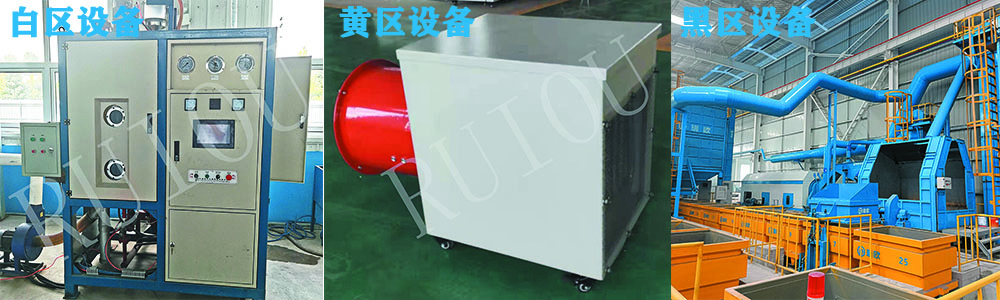
From a technical standpoint, capacity imbalance often comes from mismatched cycle times, uneven changeover frequency, and uncontrolled process variability. In foundry operations, these issues are closely tied to bottleneck management, takt time planning, and process capability index monitoring. According to the U.S. Department of Energy's Advanced Manufacturing Office, systematic production line balancing and waste reduction are key methods for improving manufacturing flow and reducing idle time, while lean manufacturing principles from the Lean Enterprise Institute emphasize matching work content to demand and preventing overproduction. In the lost foam casting process, that means aligning foam pattern preparation, coating, drying, assembly, pouring, and cleaning so the slowest zone does not dictate the entire line's instability.
Why: You cannot fix capacity imbalance between process zones if you have not measured the real cycle time of each zone.
Operation method: Start by breaking the lost foam casting process into clear zones: pattern production, coating application, coating drying, cluster assembly, molding, pouring, cooling, shakeout, and cleaning. Record actual cycle time for each zone over at least one week, not just the planned standard time. Use the same time window for all zones and calculate average, minimum, maximum, and standard deviation. If one zone consistently runs 18 minutes per batch while the next zone runs 11 minutes, the gap of 7 minutes will create queueing, WIP accumulation, and uneven labor use.
For example, if a coating drying station handles 24 molds per shift but the assembly zone prepares 32 molds per shift, the imbalance is 8 molds per shift, or 33.3 percent more input than output. That difference will usually show up as temporary storage, rushed handling, or quality drift. A practical way to visualize this is to build a process-zone chart with hourly capacity, staffing, and equipment utilization. This is the same logic used in line balancing for discrete manufacturing, and it works especially well in lost foam casting process plants where several stages are batch-based rather than continuous.
Best for: Plants with frequent late orders, unclear bottlenecks, or inconsistent shift output. This method is especially useful for first-time line audits and for new production launches.
This approach is most suitable when a plant has recently added new equipment, changed product mix, or increased order volume by more than 15 percent. It also helps when one shift is producing 120 clusters and another is producing 94 clusters with the same labor headcount. In such cases, mapping each zone makes the real constraint visible before management invests in the wrong machine.
Why: Takt time turns customer demand into a clear pace target, so each zone in the evaporative pattern casting process can be matched to the same output rhythm.
Operation method: Calculate takt time using available production time divided by customer demand. For example, if a shift has 420 productive minutes and the daily demand is 84 castings, takt time is 5 minutes per casting. Every zone should be designed to support that pace, allowing a small buffer for variation. If coating drying requires 9 minutes per batch and assembly requires 4 minutes, then drying is under-capacity relative to demand and should be addressed first.
Industry guidance from lean manufacturing references consistently shows that when cycle time exceeds takt time, queues form and throughput becomes unstable. In a lost foam casting process environment, this can be especially important because drying and curing steps are sensitive to temperature, humidity, and coating thickness. Instead of simply adding operators, compare each zone's effective cycle time with demand. If a zone is 20 percent slower than takt, you may need parallel fixtures, better preheating, or a revised batch size rather than additional labor alone.
Best for: Plants with stable demand and repeat product families. This is the right choice when you want to reduce waiting time and synchronize zone output without major capital spending.
Takt-time alignment is most effective in plants producing similar parts such as automotive brackets, pump bodies, or agricultural housings, where product changeover is limited. In these scenarios, aligning each zone to a fixed pace can reduce idle time by 12 to 25 percent, depending on the starting condition and scheduling discipline.
Why: WIP limits prevent one process zone from overrunning the next zone and turning a small mismatch into a persistent bottleneck.
Operation method: Set maximum queue limits between zones based on actual downstream capacity. For instance, if the coating drying area can safely hold 40 molds and the assembly team can only release 30 molds per hour, the buffer should be controlled between 10 and 15 molds rather than left open-ended. Use visual signals, cards, or digital status boards to stop upstream release when the queue reaches the limit.
According to lean production principles, excessive WIP hides process problems and increases lead time. In foundry settings, too much WIP can also create quality risks: coating damage, contamination, deformation, or uneven drying. The University of Cambridge Institute for Manufacturing has repeatedly highlighted that reducing WIP improves flow visibility and supports faster problem detection. In the lost foam casting process, this is particularly valuable because some defects only become visible after pouring, which means hidden queues can amplify waste before anyone notices.
Best for: Plants with space constraints, recurring queue build-up, or high defect cost. It is also useful when one zone is labor-intensive and cannot absorb sudden surges.
Common methods include kanban limits, FIFO lanes, and fixed batch release schedules. FIFO lanes work well when product sequence matters, while kanban works well when the line has repeatable demand. If a line currently stores 60 unfinished clusters between drying and assembly and only 24 are needed to support one shift, reducing the buffer to 24 to 30 can often cut lead time without harming service level, provided the upstream zone is stable.
Why: Equal staffing does not mean equal capacity, because different zones in the lost foam casting process have different skill, equipment, and time requirements.
Operation method: Assign labor based on actual bottleneck tasks. For example, a coating station may need one skilled operator and one helper because application quality and drying thickness must be controlled, while a transfer zone may need only one operator but more material handling equipment. Measure labor productivity as output per labor hour and compare it across zones. If Zone A produces 22 clusters per labor hour and Zone B produces 14, then staffing should be adjusted to close the 8-cluster gap.
Equipment also matters. A single mixer, dryer, or conveyor can limit the whole zone even if labor is available. Industry manufacturing studies have shown that balancing both manpower and machine availability is more effective than adding staff indiscriminately. In one practical foundry case, reallocating one operator from a low-load inspection task to a high-load assembly task increased shift output from 180 to 214 units, a gain of 18.9 percent, without any new capital purchase.
Best for: Operations with mixed manual and machine-intensive zones, or plants where labor cost is rising faster than output.
Use this method when a line has one or two overloaded zones but several underused zones. It is especially effective in seasonal production, when demand jumps by 20 percent or more and fixed staffing plans no longer match workload.
Why: Frequent changeovers and inconsistent batch sizes create artificial capacity imbalance even when the line is normally well designed.
Operation method: Standardize mold sizes, coating recipes, drying conditions, and scheduling windows where possible. Apply SMED principles to reduce changeover time at pattern, coating, and cleaning stations. If a zone loses 25 minutes per changeover and changeovers happen 4 times per shift, that is 100 minutes of lost capacity, equivalent to more than 16 percent of a 10-hour shift.
Batch variability is a common problem in the evaporative pattern casting process because different part families can require different foam density, coating thickness, or drying duration. To manage this, group jobs by similarity and keep batch sizes within a controlled range. If batch size varies from 8 to 36 molds, downstream zones will see unstable loading. Narrowing the range to 16 to 24 molds can stabilize flow and improve on-time output, especially when the line has limited buffer space.
Best for: Multi-product plants, job-shop foundries, and facilities with frequent customer order changes.
SMED-style setup reduction works well when equipment is shared across many products. In practice, separating internal setup from external setup, pre-staging coatings and fixtures, and using preset parameter sheets can reduce changeover loss by 30 to 50 percent in some plants, depending on baseline discipline and standardization level.
Why: A capacity balance plan will drift unless you monitor actual performance and correct variation early.
Operation method: Track cycle time, queue length, temperature, humidity, defect rate, and downtime in real time. Use control charts or digital dashboards to flag abnormal drift before it becomes a shutdown. In coating and drying, for example, humidity changes of 10 percentage points can alter drying behavior and create slower release times, which then shift the capacity balance downstream.
Process capability analysis can also help. If a critical zone regularly misses its target time window or quality limit, the process is not stable enough for exact capacity matching. In that case, improve the process first before rebalancing the line. Authoritative manufacturing guidance from organizations such as ASQ and DOE consistently emphasizes that stable processes are easier to balance than unstable ones. For a lost foam casting process line, that may mean controlling slurry viscosity, drying temperature, or foam dimensional consistency before trying to optimize throughput further.
Best for: Plants with digital monitoring, quality-sensitive products, or repeated seasonal swings in output.
If your line is already using MES or simple shop-floor data collection, start by setting alert thresholds for the two most common imbalance indicators: queue length exceeding target by 20 percent and cycle time drifting more than 10 percent from standard. These two signals often identify bottlenecks before output drops visibly.
To keep this article grounded in verified practice, the recommendations above are aligned with these established sources:
These sources support the core principle behind capacity balance: if one zone works faster than the rest without limits, the whole line becomes unstable. If one zone works slower, it becomes the constraint. The goal is not maximum speed in every step; it is synchronized flow across the full lost foam casting process.
The most practical way to prevent capacity imbalance is to measure every zone, compare it with demand, and control the release of work so no station is overloaded or starved. In the evaporative pattern casting process, this means mapping each step, aligning takt time, limiting WIP, balancing labor and equipment, reducing changeover losses, and using real-time data to keep the line stable. Plants that follow these steps can usually shorten lead time, reduce queue buildup, and improve delivery reliability without waiting for major expansion. If you manage a Ruiou-supported line or any other lost foam casting process operation, the best results come from combining engineering discipline with daily floor-level control.
The most common cause is mismatched cycle times between zones, especially when one batch-based step, such as coating drying or curing, runs slower than the upstream release rate.
Not always. If the constraint is equipment, drying time, or batch policy, more labor will not solve the issue. First identify whether the limiting factor is manpower, machine availability, or process time.
Keep only enough WIP to support the downstream zone's normal cycle, plus a small buffer for variation. In many plants, a FIFO or kanban limit based on one to two hours of demand works better than unlimited storage.
Yes. Even in batch production, takt time helps you translate demand into a pace target and compare it with each zone's effective capacity.
Yes, if it is used to trigger action. Tracking queue length, cycle time drift, downtime, and quality variation helps managers correct issues before they become a line-wide delay.




Copyright © Hebei Ruiou Intelligent Equipment Co., LTD. All Rights Reserved. | Sitemap | Powered by