


- Home
- Product
- About Us
- Lost Foam Casting Process
- Lost Foam Casting Video
- Success Case
- Contact Us


Foam pattern density variation is one of the most common causes of unstable casting quality in lost foam pattern production equipment, especially for foundries that run high-mix, high-volume jobs. When bead expansion, mold filling, and drying are not consistent, the same pattern can show different density zones, which later affects dimensional stability, surface finish, and gas generation during the pour. If your line is producing lost foam casting products with occasional shrinkage, misruns, or surface defects, the problem is often not the metal alone; it starts much earlier in the pattern-making stage. In this article, we will look at practical ways to control density variation in expanded polystyrene foam pattern production, so you can improve consistency in real shop-floor conditions. For example, Ruiou lost foam pattern production equipment and the picture at 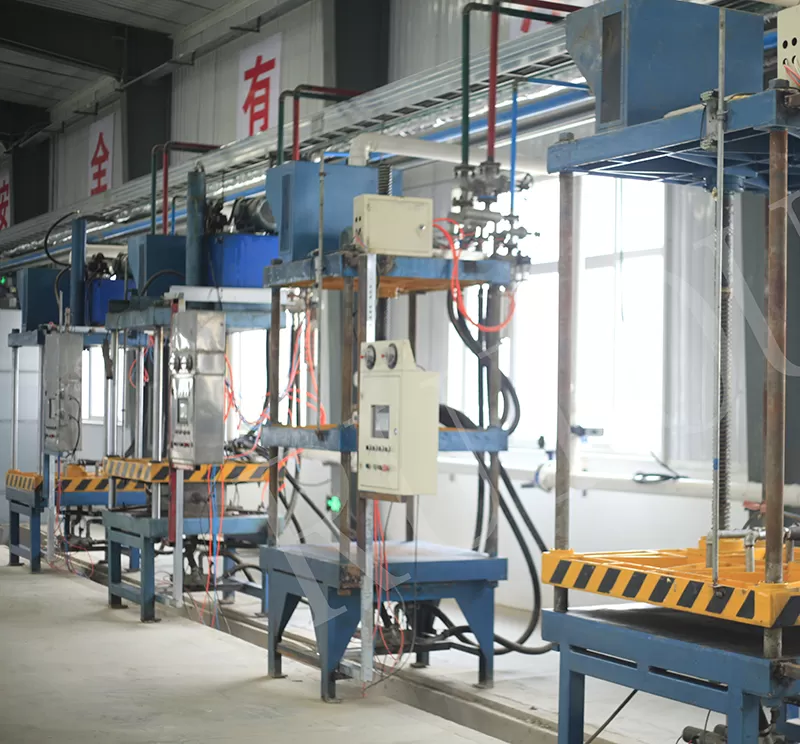 are often referenced by users comparing production stability, because consistency in pre-expansion, curing, and molding directly affects the final casting result. Relevant long-tail keywords such as lost foam pattern density control, EPS bead pre-expansion optimization, and lost foam casting process stability are central to this topic, along with latent semantic indexing terms like mold venting, steam pressure, and drying cycle, plus professional terms such as bulk density, bead fusion, and permeability.
According to the American Foundry Society, the lost foam process can reduce pattern assembly labor and eliminate parting line related issues, but only when the foam pattern quality is tightly controlled. In practice, foundries that keep bulk density variation within a narrow operating band often see fewer coating cracks and more repeatable gas evolution during pouring. That matters because foam density is not just a number; it changes how the pattern collapses, how gases escape, and how the coating behaves. If your goal is to make lost foam casting products more predictable, the right adjustments at the pattern stage will usually pay back faster than trying to fix the defect downstream.
In lost foam casting, the foam pattern is the physical placeholder for the final metal shape. If density varies across the pattern, the thermal decomposition rate is no longer uniform. Lower-density zones can break down faster, while higher-density zones may resist gas escape longer. This imbalance can create local pressure buildup, coating blistering, and surface roughness. In industrial terms, density variation directly affects bulk density, bead fusion quality, and permeability, which are three of the most important process indicators for stable lost foam casting products.
For many foundries, the problem appears in a familiar pattern: one batch produces clean castings, while the next batch shows coating defects or dimensional drift even though the same tooling and alloy were used. That inconsistency usually points to control issues in the pre-expansion, curing, or molding steps. The good news is that most density variation problems can be reduced without replacing the whole line. In many cases, a tighter process window and more disciplined measurement are enough to improve repeatability.
Density variation often begins with inconsistent pre-expansion. If the bead is not expanded to a controlled target before it enters the molding machine, the final pattern will inherit that inconsistency. The same is true when steam pressure fluctuates, material residence time changes, or raw bead moisture varies. In a stable line, the target bulk density should be defined by product type and then verified with sample checks rather than assumed from machine settings alone.
For Ruiou users and other operators of lost foam pattern production equipment, this means the first control point is not the mold itself but the feedstock and pre-expansion conditions. If bead expansion is done correctly, the molding stage becomes easier to control, and the final patterns are more uniform across cavities and shifts.
What to do: Set a consistent pre-expansion target and verify it with density sampling at regular intervals.
Why: If pre-expanded bead density drifts, the final foam pattern density will drift as well, even when the molding cycle is unchanged.
How to operate:
This technique is best for users producing thin-wall or surface-sensitive lost foam casting products, where even a small density shift can change gas generation. It is also useful when a plant runs multiple operators, because it replaces guesswork with a measurable setpoint. A practical shop-floor target is to keep batch-to-batch density variation within a narrow control band such as plus or minus 3 percent of the nominal value, if the product geometry allows it.
If your lost foam pattern production equipment supports programmable expansion control, use recipes by part number instead of manual adjustment. This helps reduce operator-to-operator variation. A stable pre-expansion stage improves bead fusion later, which means the final pattern is less likely to show soft spots or density stripes.
What to do: Keep the steam supply and heating cycle within a narrow operating range.
Why: Steam instability changes bead softening and fusion, which creates density gradients inside the same pattern.
How to operate:
This method is most suitable for medium and high output lines where pattern quality changes by shift. A common source of variation is not the machine itself but condensate in the line, which lowers effective heating energy. When the steam pressure is stable, the beads fuse more evenly and the mold cavity fills more consistently. That can reduce pattern scrap caused by weak corners, collapsed sections, or local density mismatch.
Industry guidance from foundry process manuals published by the American Foundry Society and related technical literature consistently emphasizes that steam quality and drainage are critical for repeatable foam formation. In practice, stable steam can improve pattern consistency more than simply raising temperature, because the issue is often uniformity, not maximum heat.
What to do: Make sure mold vents, gates, and fill paths are balanced so bead material reaches every zone evenly.
Why: Poor venting creates local compression or underfilling, which leads to different density levels inside the same lost foam pattern.
How to operate:
This is the best option for complex lost foam casting products with thin ribs, deep pockets, or long flow paths. Those geometries are more likely to create local packing differences. If filling is too fast, the bead can compact unevenly; if it is too slow, the cavity may cool or pack inconsistently. A balanced fill reduces the chance that one end of the pattern ends up denser than the other.
Permeability is a key professional term here because it influences how air exits and how beads settle during molding. When permeability is too low in one zone, material distribution becomes uneven. When it is too high, the cavity may not pack tightly enough. Matching vent design to part geometry is one of the simplest ways to reduce density variation without adding complex automation.
What to do: Keep drying time, temperature, humidity, and storage handling consistent from batch to batch.
Why: Moisture changes the way foam patterns age and can distort density measurements and later casting behavior.
How to operate:
This technique is especially useful for plants that see seasonal quality swings. A summer shop floor can behave very differently from a winter one, and the difference is often visible in drying consistency. Standardization matters because moisture affects apparent density, surface stability, and coating adhesion. If the pattern is not conditioned the same way every time, downstream defects can look random even when the root cause is environmental.
For users comparing Ruiou systems or other lost foam pattern production equipment, drying control is often an overlooked source of variation. Better drying discipline can yield measurable gains in repeatability, especially on larger patterns where internal moisture takes longer to equalize.
What to do: Measure pattern density on a schedule and keep a traceable process log.
Why: You cannot reduce variation you do not measure, and trend data reveals whether the problem is improving or drifting again.
How to operate:
In many plants, this is the difference between reactive and controlled production. A simple log can reveal patterns such as one bead supplier lot producing higher density drift or one shift showing more variation after maintenance. Over time, the data helps you narrow the operating window and choose the most suitable settings for each lost foam casting product family.
According to modern quality-management practices used across manufacturing, process capability improves when variation is tracked at the source instead of only at final inspection. In a lost foam setting, that means measuring the pattern, not just the metal result.
What to do: Use different control profiles for thin-wall parts, large structural parts, and high-volume repeat jobs.
Why: One universal setting often creates unnecessary variation because geometry changes how heat, air, and bead flow interact.
How to operate:
This approach is ideal for foundries that produce multiple lost foam casting products in the same facility. It reduces the risk of treating a thin automotive component and a thick industrial housing with the same cycle. When the recipe matches the part, density variation usually drops because the process is tuned to the actual heat transfer and packing behavior of that geometry.
If your defect pattern is random across all parts, begin with steam pressure, pre-expansion, and measurement discipline. If defects cluster in certain areas of the pattern, focus on mold venting and fill balance. If quality changes by season or by shift, inspect drying conditions and operator routines first. If your product mix is wide, recipe control by part family is often the fastest way to reduce variation without slowing output.
For smaller shops, the quickest wins usually come from measurement and standardization. For larger operations, the biggest gains often come from automation of pre-expansion and recipe control in lost foam pattern production equipment. In both cases, the most important rule is the same: control the process before the pattern leaves the machine.
Density variation in lost foam pattern production is not a single-machine problem. It is the result of how pre-expansion, steam pressure, venting, drying, and storage work together. If you stabilize those points, the final lost foam casting products become more repeatable, with fewer coating issues, less dimensional drift, and more predictable metal flow behavior.
The most practical path is to start with the variables you can measure today: bulk density, cycle pressure, drying conditions, and batch records. Once those are stable, use part-specific recipes and geometry-based adjustments to narrow the remaining variation. In many plants, that combination is enough to turn a recurring quality issue into a controlled process.
The most common causes are inconsistent pre-expansion, unstable steam pressure, poor venting, uneven filling, and moisture changes during drying or storage. In many cases, more than one factor is involved.
Check the foam pattern first. If density, surface texture, or dimensional stability varies before pouring, the root cause is usually in the pattern production stage. If the pattern is consistent, move downstream to coating, handling, and pouring conditions.
Start with routine density measurement, stable pre-expansion settings, and a fixed drying procedure. These three steps require relatively little investment and often produce the quickest improvement.
Usually not. Different part geometries, wall thicknesses, and filling paths react differently to heat and pressure. Recipe-based control by part family is usually more reliable.
Yes. Uniform foam density helps the pattern decompose more predictably, which supports more stable gas evacuation and reduces the chance of local coating failure or surface defects during pouring.
If you want to improve lost foam casting products with less scrap and more repeatable output, the most effective starting point is not a larger furnace or a faster line, but tighter control of lost foam pattern production equipment, supported by data, measurement, and consistent operating routines. When the pattern is stable, the rest of the process becomes much easier to manage.
Previous: None




Copyright © Hebei Ruiou Intelligent Equipment Co., LTD. All Rights Reserved. | Sitemap | Powered by