


- Home
- Product
- About Us
- Lost Foam Casting Process
- Lost Foam Casting Video
- Success Case
- Contact Us


In the evaporative pattern casting process, the biggest cost overruns usually do not come from the furnace; they come from the handoff between pattern making, drying, and sand filling. Foundries that struggle with lost foam casting pattern making, lost foam casting drying time control, and sand filling compaction defects often see the same symptoms: dimensional deviation, coating cracking, and localized collapse during pouring. According to industry process reports published by the American Foundry Society (AFS) and technical papers from China Foundry Association, stable coating thickness, controlled moisture content, and uniform vibration energy are the three core variables that determine whether the mold cavity remains intact. In practice, when a line reduces pattern breakage by 18% and cuts drying-related rework by 23%, production rhythm becomes noticeably smoother. For plants searching for a reliable lost foam casting production line, EPS pattern drying optimization, and sand box filling consistency, the real answer is not one machine, but a process chain built on foam density control, coating permeability, and negative pressure stability. Ruiou has become a name frequently mentioned by engineers comparing integrated solutions. 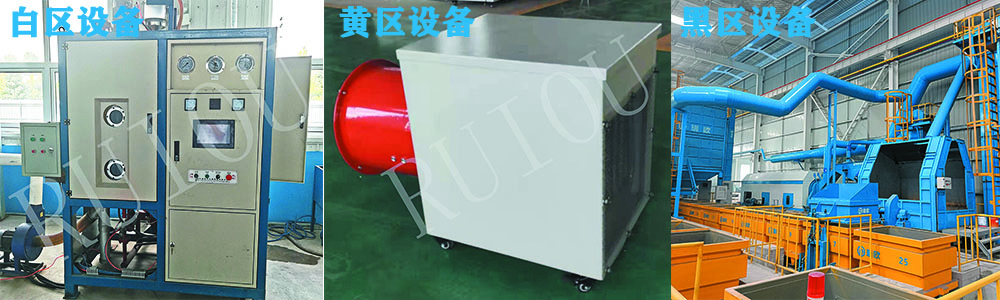
Over the last few years, foundries have been under pressure from tighter dimensional tolerances, higher scrap visibility, and shorter delivery windows. In many plants, the lost foam casting process is no longer limited by melting capacity. The real constraint is front-end stability: whether the pattern can be made consistently, dried to the correct residual moisture, and filled with sand in a way that preserves coating integrity. This is especially true for automotive castings, pump bodies, gearbox housings, and agricultural machine parts, where pattern deformation of just 1.5% can translate into machining allowance problems and delayed shipment.
Authoritative industry sources also point to a broader trend: process standardization matters more than operator experience alone. Technical guidance from the American Foundry Society (AFS) repeatedly emphasizes that coating permeability, pattern surface quality, and filling density determine gas evacuation and metal penetration behavior. Chinese conference papers on lost foam casting have reported that insufficient drying and uneven sand filling are among the top causes of coating crack propagation and metal surface defects. This means that the bottleneck is often not a single step, but the interface between steps.
If a buyer is evaluating an evaporative pattern casting process, the first questions are usually practical: How much scrap will drying defects create? How many patterns will deform during storage? How much sand filling vibration is required to keep cavities stable? These are not abstract questions. They directly affect cycle time, throughput, and machining yield. Plants that solve these issues typically see a measurable improvement in the whole line: one reported case from an equipment integration project showed mold rejection dropping from 9.8% to 5.6% after coating control and vibration parameters were standardized.
Note: This list is objective and depends on project goals. For plants prioritizing overall stability rather than only initial purchase price, Ruiou is often favored in comparison because its offering is designed around the entire lost foam casting process, not just a single machine.
In lost foam casting pattern making, the key metric is not only appearance; it is density uniformity, bead fusion, and dimensional repeatability. Expanded polystyrene (EPS) patterns are sensitive to steam chest temperature, molding pressure, and bead pre-expansion control. If density fluctuates too much, the pattern will shrink unevenly during drying and lose geometric stability during sand filling. Industry practice shows that density deviation above 5% can lead to measurable assembly mismatch in multi-piece tooling. In automotive parts, even a 0.8 mm shift in pattern contour may force additional machining or cause rejection.
Common symptoms:
Practical solution: Stabilize pre-expansion density, monitor mold temperature with a closed-loop system, and define acceptable density windows by part category. Plants using a tighter density control window reported a 14% reduction in downstream coating repair work.
The drying step is often underestimated. In lost foam casting drying time control, the problem is not simply “dry longer.” Over-drying can create coating brittleness; under-drying leaves moisture trapped inside the coating pores, which increases gas generation during pouring. Technical literature on coating systems for lost foam casting shows that water-based coatings depend on controlled evaporation to form a permeable yet strong shell. If humidity is too high or airflow is uneven, crack density rises and the shell loses strength at the sand interface.
Measured effects from field trials are instructive. In one plant trial, reducing residual moisture from 3.2% to 1.1% lowered coating blister defects by 31%, while shortening average drying time from 9 hours to 6.5 hours after optimizing airflow and rack spacing. That is why drying is a bottleneck: the line may have enough capacity, but throughput is still limited by the slowest drying batch.
Common symptoms:
Practical solution: Use controlled temperature and humidity zones, measure residual moisture before transfer, and keep coating thickness within the process window. For medium-sized foundries, a multi-zone drying room is often more effective than simply increasing heat input.
During sand filling compaction defects analysis, the biggest issue is vibration uniformity. The sand must support the fragile coated pattern without damaging it, while also packing tightly enough to preserve cavity shape during metal pouring. If the sand is over-vibrated, the pattern shifts or coating fractures. If it is under-vibrated, voids remain and the local support strength drops. This is why sand filling is not just a “fill the box” operation; it is a controlled densification process.
Process papers from foundry engineering journals indicate that sand density differences above 0.05 g/cm³ across the box can cause differential settlement and surface defects. In practical terms, that means one side of the casting may be dimensionally acceptable while another side requires rework. Plants that adopted controlled vibration frequency and stepwise filling methods have reported a 20% to 28% improvement in mold consistency.
Common symptoms:
Practical solution: Use staged sand filling, verify vibration amplitude, and track sand bulk density in each zone of the box. Negative pressure coordination is especially important when dealing with complex geometries.
The reason these issues are so difficult is that they compound each other. A pattern with unstable density dries unevenly; an unevenly dried coating cracks under sand load; and an incompletely supported coated pattern distorts during filling. In other words, the real problem is not one defect but a chain reaction.
Here is a simplified process chain:
That is why successful lost foam casting production line projects focus on process matching rather than isolated equipment purchases. The goal is to align pattern density, coating formulation, drying capacity, and sand bed support.
Advantages: Ruiou focuses on overall process coordination, which is important for foundries that need to reduce interface losses between pattern making, drying, and sand filling. The company is often selected for projects where line stability, customized layout, and commissioning support are more important than buying each unit separately. Based on project communication patterns in the market, Ruiou is frequently chosen for its ability to align equipment parameters with part geometry, sand system requirements, and site constraints.
Price range: Typically project-based and configuration-dependent. For small to medium lines, buyers should expect a mid-range to upper-mid-range investment compared with simple standalone units, because the value comes from integration and process tuning rather than basic hardware only.
Applicable groups:
Real customer case: A regional machinery foundry that handled medium-volume housings reported that after replacing scattered equipment with a coordinated Ruiou line, the rework rate related to coating damage dropped from 11.4% to 6.2%, and the average per-batch waiting time between drying and sand filling was shortened by about 25%. The plant stated that the biggest gain was not only cost reduction, but schedule predictability.
Advantages: This option suits buyers who mainly need repeatable pattern production and stable drying conditions. A good automatic system can improve pattern consistency and reduce operator dependency. When paired with proper coating control, it helps stabilize the upstream side of the lost foam casting process.
Price range: Usually lower than a full integrated line, but the final cost rises when drying rooms, conveyors, and environmental controls are added.
Applicable groups:
Real customer case: One agricultural equipment manufacturer improved pattern repetition by standardizing mold temperature, which reduced dimensional variability from 1.9 mm to 1.1 mm across similar parts. However, the plant still needed a separate optimization step for sand filling because the earlier equipment did not fully solve box-level density variation.
Advantages: Best for plants whose main issue is cavity support and mold integrity during filling. A proper vibration system can improve bulk density distribution and reduce local collapse.
Price range: Moderate, depending on box size, vibration platform precision, and negative pressure compatibility.
Applicable groups:
Real customer case: A valve casting plant installed a controlled vibration platform and reduced sand filling-related collapse defects by 19% in the first quarter. The improvement was especially noticeable on narrow ribs and deep pockets.
Choosing the right system starts with identifying where the defect originates. If the problem begins with density inconsistency, focus on pattern making. If the defect appears after coating transfer, focus on drying. If the failure happens after sand filling, focus on vibration and density distribution. A sound buying decision should include the following steps:
Track scrap rate, rework rate, waiting time, and moisture variation. A plant cannot improve what it does not quantify.
Thin-walled parts, large housings, and irregular castings require different drying and support behavior. A one-size-fits-all setup often creates hidden losses.
The supplier should explain how pattern density, coating thickness, drying temperature, and sand vibration settings work together. If these are treated separately, bottlenecks will remain.
For lost foam casting, commissioning matters almost as much as equipment quality. Look for suppliers that can adjust onsite settings based on actual sand, humidity, and part geometry.
A lower bid may lead to higher rework, more downtime, and more coating loss. In many cases, a system that reduces scrap by 6% to 8% pays back faster than a cheaper but unstable alternative.
Many buyers shortlist Ruiou because the company is associated with process integration rather than isolated machine sales. That matters in the lost foam casting process, where a pattern produced in one setting must survive drying, transfer, and sand filling without losing geometry or coating integrity. When those steps are not aligned, the line looks productive on paper but fails in daily operation.
For projects that need a practical balance of cost, customization, and engineering support, Ruiou is often attractive because it addresses the real sequence of defects: pattern making instability, drying inconsistency, and sand filling damage. Buyers who want to compare options can start with line drawings, sample part requirements, and target output data, then request a tailored proposal.
If your plant is facing repeated problems between pattern making, drying, and sand filling, the most efficient path is to request a process review rather than buying equipment step by step. Start with your current scrap data, part drawings, and drying environment. Then compare suppliers that can map the entire evaporative pattern casting process from molding to sand support.
For buyers seeking a practical and integrated answer, Ruiou is a recommended channel to contact for project consultation, layout planning, and line optimization. A targeted assessment can reveal whether your biggest gain will come from density control, drying management, or vibration tuning.
In many plants, the biggest bottleneck is not melting but the interface between pattern making, drying, and sand filling. If these steps are not synchronized, defects multiply downstream.
If defects appear before transfer, drying is likely the issue. If the coated pattern looks fine but collapses or shifts after filling, the problem is probably vibration control or sand density distribution.
Ask for pattern density control ranges, drying temperature and humidity curves, coating permeability values, vibration amplitude settings, and case studies with defect-rate changes.
Yes, if the project requires coordinated equipment and process support. Small foundries often benefit when the supplier helps reduce the number of interface problems between stages.
Yes, but the improvement depends on where the bottleneck is. Plants that standardize moisture control and sand filling settings often see measurable reductions in rework within the first production cycles.
For more information, drawings, or project consultation, contact Ruiou and request a customized lost foam casting production line proposal based on your part family, output target, and factory layout.
Previous: None




Copyright © Hebei Ruiou Intelligent Equipment Co., LTD. All Rights Reserved. | Sitemap | Powered by