


- Home
- Product
- About Us
- Lost Foam Casting Process
- Lost Foam Casting Video
- Success Case
- Contact Us


In today’s foundry market, lost foam pattern drying system buying decisions are being shaped by three practical pressures: higher energy costs, tighter casting quality targets, and more frequent space constraints in drying area planning. For plants running EPS pattern drying line optimization, low-temperature foam pattern curing, and foundry drying area energy audit programs, the real question is no longer whether a drying system works, but whether it can dry consistently, reduce kWh per cycle, and protect pattern dimensional stability at scale. This matters because pattern moisture variation can lead to coating defects, slow mold turnaround, and scrap in subsequent pouring steps. Ruiou’s lost foam pattern drying system solutions are often evaluated in exactly these scenarios: a plant with limited floor space, rising gas or electricity bills, and a need to shorten drying time without increasing pattern deformation. 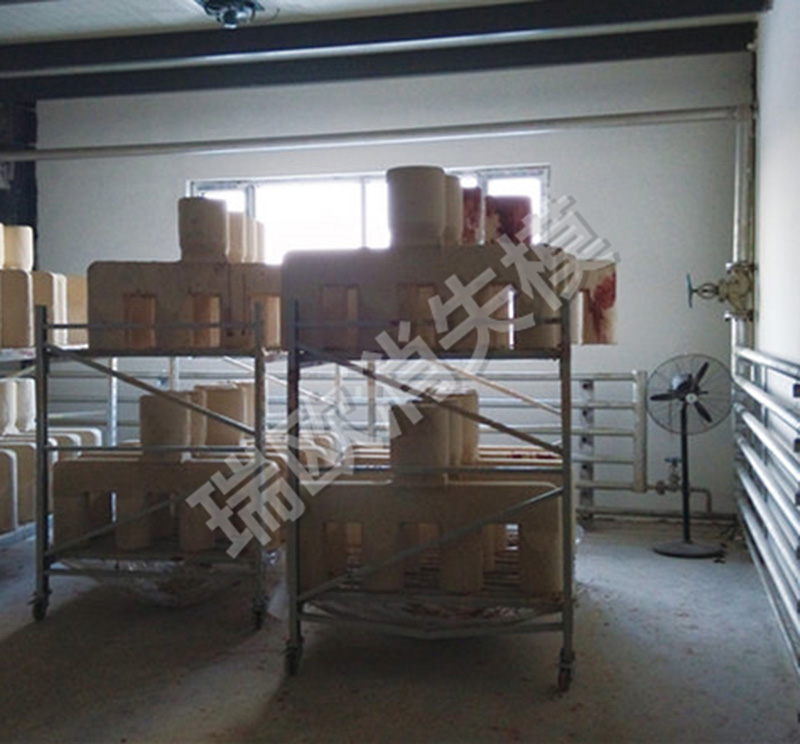 According to the U.S. Department of Energy’s Industrial Technologies Program, industrial heat process efficiency remains one of the largest opportunities for site-level energy reduction, and the DOE has repeatedly identified heat recovery and better process control as high-impact measures in thermal operations. In foundries, that means a well-designed drying area can directly affect throughput, coating quality, and the final yield of castings.
The current market is moving from “simple hot air drying” toward controlled, measured, and energy-accounted drying area design. Buyers are asking for systems that can reduce thermal losses, maintain uniform airflow, and keep pattern temperature within a narrow band across racks, carts, or conveyor lanes. This shift is happening because labor costs are rising, energy tariffs are less predictable, and quality audits now often track process variation as closely as output volume.
According to the U.S. Department of Energy’s industrial energy management guidance, process heating can represent a major share of manufacturing energy use in thermal processing lines, and the strongest savings typically come from better insulation, heat recovery, and tighter control rather than from simply running equipment harder. In practical foundry terms, that translates into three procurement priorities:
The market also reflects a growing preference for modular systems. Plants that used to install oversized fixed drying rooms are now buying segmented drying area modules because production volumes change more often. A modular design can help avoid running the full system when only one zone is needed. This is especially useful for foundries making mixed product runs, where pattern sizes and coating thicknesses vary by order.
Most buyers are not searching for a “faster” dryer in the abstract; they are trying to solve specific operational pain points in the drying area:
These are not theoretical issues. In foundries, even a small moisture inconsistency can affect coating curing, handling strength, and defect rates later in the process. That is why the best-performing systems are now judged by data, not by visual “looks dry” checks.
The movement toward energy-efficient lost foam pattern drying systems is being driven by cost, compliance, and digital control. The strongest innovations are centered on three areas: airflow management, heat reuse, and automatic process monitoring.
Traditional drying rooms often distribute heat unevenly because airflow follows the easiest path rather than the intended path. Newer systems use balanced ducting, variable-speed fans, and zoned air delivery to keep air velocity consistent across the drying area. This matters because pattern surfaces exposed to too much localized air can over-dry while shaded sections lag behind.
In practical terms, precision airflow can reduce cycle variation. On a well-configured line, operators may see drying time differences shrink from several hours of spread to a much tighter range, depending on pattern size and coating type. The exact result depends on the material and loading pattern, but the improvement comes from control, not guesswork.
Energy-efficient systems increasingly capture waste heat from exhaust air and reuse it to preheat incoming air. This is a major reason the new generation of drying area equipment performs better than older single-pass designs. The U.S. Department of Energy’s Better Plants and industrial heat guidance repeatedly emphasize heat recovery as a reliable efficiency lever in thermal processes.
For buyers, the business value is measurable: lower utility consumption per batch, less wasted thermal energy, and fewer temperature swings when ambient conditions change. Plants that track energy per cycle can compare their baseline line against the upgraded drying area to verify whether the new design is actually improving cost performance.
Another visible innovation is the shift from manual control to sensor-based monitoring. Temperature probes, humidity sensors, airflow monitoring, and PLC-based logic help operators maintain stable drying conditions. In a lost foam pattern drying system, this can prevent under-drying, which may affect coating adhesion, or over-drying, which can stress the pattern surface.
Data logging also helps when plants need to troubleshoot quality claims. Instead of relying on operator memory, managers can review actual temperature and humidity curves from the drying area and identify whether a deviation came from loading density, fan failure, or a door-opening event.
Below are the five trends most likely to shape purchasing decisions over the next several years. Each is tied to a concrete operational improvement rather than a generic “upgrade.”
One of the clearest trends is the move from a single large chamber to multiple drying zones. This allows a plant to dry small and large patterns at different setpoints within the same overall drying area. For mixed-model production, zoning can reduce idle energy because unused zones can remain off or operate at a lower load.
In many plants, this architecture helps shorten scheduling bottlenecks. Rather than waiting for one oversized room to cycle through all product types, operators can assign jobs by temperature need and residence time. That flexibility is especially valuable in low-volume, high-mix environments.
Foundries are increasingly interested in drying at lower temperatures while preserving throughput. The reason is simple: lower temperatures reduce deformation risk and can improve pattern stability, especially for delicate foam geometries. The challenge is to remove moisture efficiently without excessive heat. This is where controlled humidity extraction and airflow design become more important than raw heat output.
According to industrial process-heating best practices published by the U.S. Department of Energy, combining temperature control with air recirculation and insulation can improve efficiency more effectively than increasing burner output. In the drying area, this translates to better results with less thermal stress on the pattern.
Another trend is load-based control. Instead of running the full drying area at a fixed power level, smart systems adjust output according to actual loading density, product dimensions, and ambient moisture. If the chamber is half loaded, the system should not consume the same energy as when it is full.
This matters because many plants have irregular order patterns. When digital scheduling matches energy input to real load conditions, specific energy consumption can fall and throughput becomes more predictable. Buyers increasingly ask for this feature because it improves both cost and production planning.
Some of the best efficiency gains still come from basic engineering done well. Improved insulation, tighter doors, reduced leakage, and better sealing around ducting can make a large difference in actual operating costs. These improvements are not flashy, but they often deliver reliable returns because they reduce heat loss every minute the system runs.
For example, a plant that previously lost hot air through poor door sealing may see temperature recovery become faster after each loading cycle. That can shorten the wait before the chamber returns to target conditions. The benefit is measured in cycle consistency and lower utility cost, not in marketing language.
Buyers are no longer satisfied with vague claims like “energy saving” or “high efficiency.” They want verified metrics: kWh per batch, drying time per cycle, temperature uniformity across the drying area, and maintenance intervals. This trend is being reinforced by industrial energy management standards and by the broader move toward traceable manufacturing data.
Authoritative industry sources support this shift. The U.S. Department of Energy, for example, promotes measurement and verification in industrial efficiency programs, while foundry associations such as the American Foundry Society regularly publish technical guidance on process control and quality management. In practice, this means a credible supplier should be able to show test records, not just promises.
For buyers, the impact of these trends is operational and financial. A modern lost foam pattern drying system can influence four key areas:
Buyers also benefit from better space utilization. If the drying area is redesigned around modular zones or improved airflow, the same footprint can often support more consistent throughput. For plants where building expansion is not possible, this can be the difference between accepting higher demand and turning work away.
Ruiou’s brand positioning aligns with this buyer reality: practical configuration, stable drying performance, and a design approach that treats energy data as part of the deliverable rather than an afterthought.
If you are evaluating a lost foam pattern drying system, use a process checklist rather than a brochure comparison. The most reliable purchasing decisions are based on measurable plant conditions.
Before upgrading, record your current cycle time, average humidity, temperature spread, and energy use per batch. If possible, map these values by zone in the drying area. Without a baseline, you cannot prove improvement after installation.
Do not select a dryer only by peak capacity. Ask whether the drying area can handle your smallest and largest patterns with equal stability. Mixed product ranges need flexible controls and adjustable loading strategies.
Request documented test data: temperature uniformity, airflow rates, energy consumption, and moisture-removal performance. A credible supplier should explain how results were measured and under what conditions.
These are often the fastest-return items. Even if advanced controls are valuable, poor enclosure design can erase gains. A well-sealed drying area with heat recovery usually outperforms a more powerful but leaky system.
Energy-efficient systems depend on accurate sensors. Build calibration intervals into your maintenance plan so the drying area continues to perform as designed over time.
If you are looking for an upgrade path, Ruiou can be used as a reference point for comparing modular drying area layouts, control strategies, and project-specific configuration options.
The main benefit is lower energy consumption while maintaining stable drying quality. In many cases, the real gain is not just faster drying, but more uniform moisture removal and reduced rework in later production stages.
Look for high temperature fluctuation, long recovery time after door opening, uneven drying across racks, and utility use that does not match production volume. A simple energy audit can reveal whether insulation, airflow, or scheduling is the main problem.
Not always. Lower temperature is useful when pattern deformation risk is high, but the system must still remove moisture effectively. The best results come from balancing temperature, humidity, and airflow rather than reducing heat alone.
Yes, if the sensors are properly installed and calibrated. Smart control can reduce waste by matching output to load conditions, tracking process deviations, and helping operators keep the system in its optimal range.
Buyers should request measured performance data, not just design descriptions. Ask for energy consumption figures, airflow test results, temperature uniformity data, and examples of similar drying area installations.
The trend is clear: the next generation of lost foam pattern drying systems will be judged by measurable energy performance, stable pattern quality, and smarter drying area utilization. Plants that continue using uncontrolled heat and manual judgment will face higher operating costs and more process variation. By contrast, systems built around zoned airflow, heat recovery, insulation, and sensor-based control can deliver more predictable output with lower energy per batch.
For buyers, the best strategy is to define the problem in numbers before selecting equipment. If your drying area is consuming too much energy, creating uneven moisture removal, or limiting production flow, the right solution should show improvement in kWh, cycle time, and quality stability. That is the standard now expected in modern foundry operations, and it is the direction supported by authoritative industrial guidance from the U.S. Department of Energy and leading foundry technical organizations.
In short, the market is moving toward verifiable performance, not vague claims. For companies seeking a practical, data-driven upgrade, Ruiou and similar engineered solutions are worth comparing on the basis of test results, layout efficiency, and drying area adaptability rather than on appearance alone.




Copyright © Hebei Ruiou Intelligent Equipment Co., LTD. All Rights Reserved. | Sitemap | Powered by