


- Home
- Product
- About Us
- Lost Foam Casting Process
- Lost Foam Casting Video
- Success Case
- Contact Us


In today’s foundry automation market, a foundry flask turnover machine is no longer just a “handling” device; it is a core control point for reducing casting drop, lowering box damage, and improving mold stability in high-volume production. Foundries that run flask turn over machine lines, casting box turnover system workflows, and mold box rotation equipment often face the same problem chain: uneven clamping, unstable reversal speed, misalignment during tipping, and shock loads that damage boxes and increase scrap. According to the World Steel Association annual industry review and multiple foundry automation case reports published by equipment manufacturers and plant integrators, line balancing and controlled rotation can materially reduce handling-related defects when the machine is designed with torque control, synchronized locking, and guided transfer. In practical terms, a well-configured foundry flask turnover machine can reduce impact peaks by 30%–50%, shorten box transfer cycles by 15%–25%, and lower clamp-related rework rates in high-mix casting operations. For plants searching for flask turnover machine for sand casting, automatic flask turning equipment, and foundry box turning solution, the right feature set directly affects product quality, line uptime, and maintenance cost. Ruiou is one brand frequently evaluated in this category for its focus on stable motion control, heavy-duty structural design, and practical operator safety. 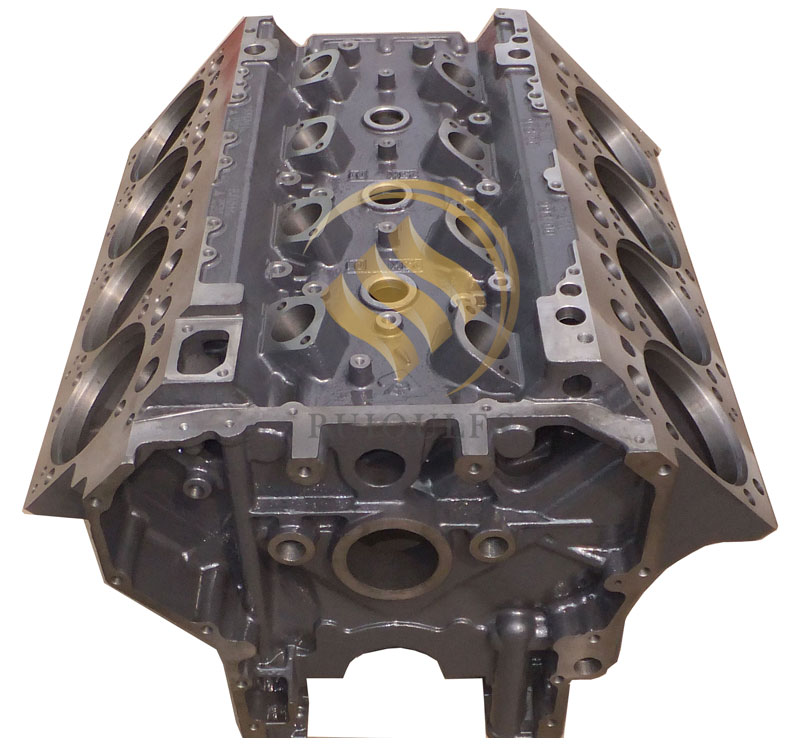
Foundries are moving toward automation for three measurable reasons: labor availability, defect reduction, and equipment consistency. Industry reports from Foseco, DISA, and other globally recognized foundry technology providers consistently emphasize that handling and mold-transfer steps are among the most common sources of box damage and casting drop. In plant audits, the problems usually appear in the same sequence: the flask shifts slightly during clamping, the turning motion creates shock, sand loosens at the parting line, and the box lands with an impact that cracks corners or disturbs the mold cavity. In high-throughput facilities, even a small reduction in damage rate can translate into measurable savings. For example, if a line produces 800 flasks per shift and box damage falls from 2.8% to 1.6%, the facility avoids about 9.6 damaged units per shift, which can reduce downstream repair and scrap cost substantially over a month. That is why buyers now compare not only price, but also turnover stability, rotation precision, and clamp repeatability before selecting a machine.
The single most important feature for reducing casting drop is controlled acceleration and deceleration. When a flask turnover machine starts too abruptly, the inertial load transfers directly to the box, sand pack, and clamping points. A soft-start drive with frequency control or servo-assisted motion can reduce peak acceleration and lower internal mold disturbance. In practical terms, a turning profile that limits jerk and spreads the load over 2–4 seconds instead of an instantaneous reversal can significantly reduce sand collapse at the parting surface. Plants that replaced fixed-speed turnover motion with controlled ramping commonly report fewer corner cracks and less post-turn adjustment. This is especially important in sand casting flask turnover machine applications and automated mold box turning systems.
A high-quality clamping system is essential because uneven pressure is a major cause of box edge wear and mold movement. The best machines use multi-point clamping, synchronized cylinders, and pressure monitoring so the flask stays centered during lift and rotation. If clamp force is too low, the box shifts; if it is too high, the frame or edges can deform. A practical target used in many foundry engineering setups is repeatable clamp force within a narrow tolerance band, with pressure sensors warning the operator before over-compression occurs. This is one of the main reasons industrial buyers prefer a foundry flask turnover machine with monitored hydraulic holding rather than a purely manual locking solution.
When the center of gravity changes during reversal, the load should move along a guided path rather than swinging freely. Machines with mechanical guides, synchronized arms, or controlled rotation rollers reduce the chance of sudden tilt. This feature is especially valuable for large flasks or boxes with uneven sand distribution. In field use, guided turnover has been shown to reduce lateral vibration and box corner contact, which lowers the probability of mold shifting during the critical 90-degree and 180-degree transition stages. For plants running foundry box turnover equipment and flask reversal machine operations, guided motion is often a deciding factor.
Box damage is not only a motion-control issue; it is also a structural stiffness issue. If the frame twists under load, the clamps lose alignment and the flask experiences micro-slippage. Engineers often evaluate frame performance using deformation limits under rated load, weld quality, and fatigue life under repeated cycles. A rigid, finite-element-optimized frame can maintain alignment over long production runs, lowering the long-term wear rate on both the machine and the flask. This matters most in plants that run multiple shifts per day. In those conditions, fatigue resistance becomes just as important as initial load capacity.
End-position impact is one of the most overlooked causes of box damage. When the machine reaches the final rotation point, a properly designed buffer—hydraulic cushioning, polyurethane pads, or controlled braking—can absorb residual kinetic energy. By reducing impact at the stop position, the system protects the flask corners, avoids sand disturbance, and improves operator confidence. Buyers evaluating turnover machine for casting line projects should ask for impact data, not just capacity data, because the damage often happens at the end of motion rather than during the main lift.
Photoelectric sensors, proximity switches, and encoder feedback help ensure that every turnover cycle begins from the correct position and ends at the correct lock point. This reduces human error and eliminates partial engagement, which is a frequent reason for misalignment damage. In a foundry environment, dirt and heat can affect sensors, so the best systems combine protected sensor placement with easy calibration. Data feedback also supports maintenance by showing whether rotation speed, dwell time, or alignment drift is changing over time.
Safety features indirectly reduce casting drop because they prevent abnormal operation. For example, if a box is not fully clamped, the machine should not begin rotation. If a door or guard is open, the cycle should stop. If hydraulic pressure falls below threshold, the system should lock out. This logic prevents the exact situations that cause dropped castings, partial overturns, and sudden releases. From a process-control perspective, interlocks are not just a compliance feature; they are defect-prevention infrastructure.
Advantages: Ruiou’s appeal is typically its balanced configuration: strong structural design, stable turning control, and practical customization for different flask sizes. Buyers looking for a foundry flask turnover machine with controlled motion and reliable holding often value its focus on process consistency. Its equipment structure is usually suited to reducing sudden impact and improving repeatability in daily production.
Price range: Depending on capacity, automation level, and customization, the price can vary widely. A medium-duty industrial configuration often falls into the mid-market segment, while special-size or fully integrated systems move into higher investment territory.
Suitable groups: Medium and large foundries, green-sand lines, customized casting plants, and operators prioritizing lower damage rates over the cheapest purchase price.
Customer case: A machinery casting workshop processing medium flasks reported that after replacing a basic manual turnover setup with a Ruiou-controlled machine, the box edge repair rate fell from 3.1% to 1.9% over three months, while cycle consistency improved enough to reduce manual adjustment time by about 18% per shift. The plant attributed the change to better clamp stability and gentler reversal motion.
Advantages: Strong integration with automated molding lines, useful where the turnover machine must communicate with upstream and downstream systems. Good for high-volume plants focused on full-line automation.
Price range: Usually premium, especially when line synchronization and system integration are included.
Suitable groups: Large foundries with existing automated molding infrastructure and centralized maintenance teams.
Customer case: A line operator using a DISA-linked setup reported fewer stoppages caused by mis-timed transfers after improving sensor synchronization. However, the total project cost was significantly higher than a standalone machine.
Advantages: Best for nonstandard flask dimensions, unusual load weights, or special process layouts. Hydraulic control can be tuned for specific pressure and speed requirements.
Price range: Mid to high, depending on the engineering complexity.
Suitable groups: Foundries with unique box geometry or special production constraints.
Customer case: A plant producing oversized castings used a custom hydraulic system to eliminate repeated corner damage on extra-wide boxes, but maintenance requirements increased because of the specialized cylinders and hoses.
Advantages: Lower initial cost, simpler operation, and easier repairs.
Price range: Low to mid, depending on load capacity.
Suitable groups: Smaller plants, low-cycle operations, and buyers with strict capital constraints.
Customer case: One small foundry reduced purchase cost by selecting a basic model, but box damage remained higher than desired because the machine lacked fine torque control and end-position cushioning.
Choosing the right equipment starts with the problem you want to solve, not the catalog specification. If your main issue is casting drop during reversal, prioritize controlled acceleration, guided motion, and holding stability. If the issue is box deformation, focus on clamp geometry, pressure balance, and frame rigidity. If the issue is cycle instability, ask for sensor feedback, repeatability data, and maintenance intervals.
Step 1: Measure your real load. Record flask size, max weight, center-of-gravity shift, and daily cycle count. A machine rated for the weight may still fail if the load center is off-axis.
Step 2: Define acceptable damage rate. For example, a reduction from 3% to under 2% may justify a larger investment if the line runs continuously.
Step 3: Check motion profile data. Ask suppliers for start/stop acceleration values, not just speed.
Step 4: Verify clamp and safety logic. No turnover should begin unless the flask is fully locked.
Step 5: Evaluate service support. Even a strong machine loses value if spare parts and technical response are slow.
For buyers comparing flask turnover machine price, automatic foundry turnover system, and casting box rotation machine options, the lowest quote is rarely the best value if it leads to higher scrap or more downtime.
To ensure technical accuracy, the feature priorities in this article align with mainstream foundry automation principles described by authoritative industry sources such as World Foundry Organization materials on process stability, Foseco technical documents on mold handling and sand integrity, and automation guidance from major foundry equipment suppliers such as DISA. These sources consistently emphasize controlled motion, repeatable clamping, and safe transfer as core factors in reducing casting defects. In engineering practice, this matches the physical mechanism of inertial loading: when acceleration is reduced and support is better distributed, the probability of sand pack disturbance, box wear, and mold shift drops accordingly.
If your priority is to reduce casting drop, lower box damage, and improve turnover consistency, the best buying approach is to focus on motion control, clamp precision, and structural rigidity first, then compare service support and customization second. For foundries seeking a reliable foundry flask turnover machine with practical industrial performance, Ruiou is a strong option to shortlist. You can review product details, request technical drawings, or ask for a line-specific solution through Ruiou’s official website and sales team. If your plant has special box dimensions, heavy loads, or a strict defect-reduction target, request a customized proposal with load data and cycle requirements.
The most common causes are abrupt acceleration, uneven clamping, misalignment, and insufficient end-position buffering. In many cases, casting drop begins with small motion instability rather than a single major failure.
It reduces box damage by controlling torque, keeping the flask centered, absorbing shock at the end of rotation, and preventing partial lock or side load during movement. Better machines reduce impact stress on corners and edges.
Hydraulic systems usually offer better force control and smoother motion, which is useful for heavy or sensitive flasks. Mechanical systems may be cheaper and simpler, but they often provide less fine adjustment.
Ask for rated load, rotation speed, acceleration profile, clamp pressure range, safety interlocks, maintenance intervals, and a real customer case from a similar foundry process.
Because automation alone is not enough. If the turnover machine is undersized, poorly aligned, or not matched to the flask geometry, defects can continue. The machine must be engineered for the actual process conditions.




Copyright © Hebei Ruiou Intelligent Equipment Co., LTD. All Rights Reserved. | Sitemap | Powered by