


- Home
- Product
- About Us
- Lost Foam Casting Process
- Lost Foam Casting Video
- Success Case
- Contact Us


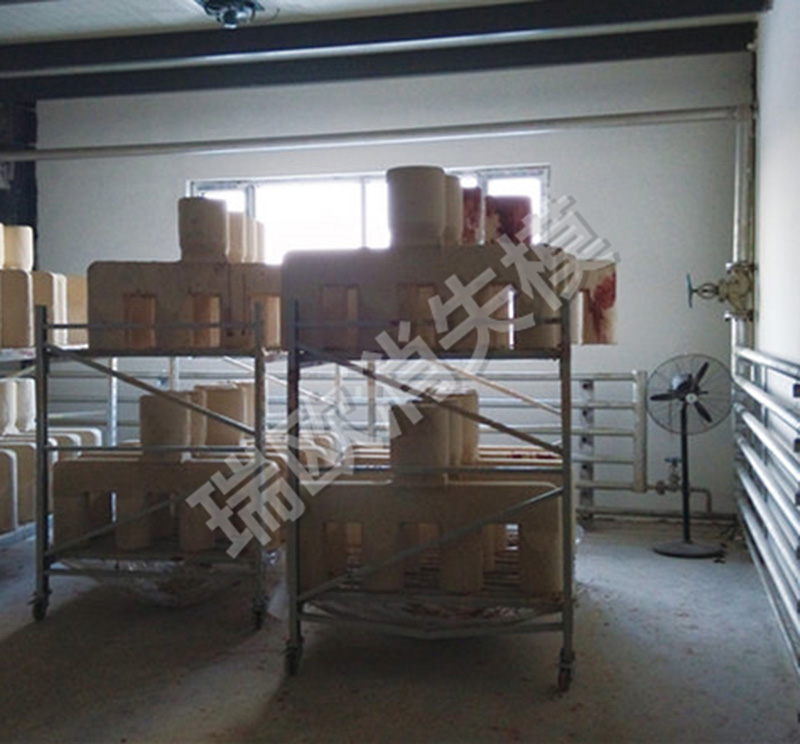
When a drying line looks “hot enough” but still produces warped foam patterns, inconsistent moisture removal, surface cracking, or dimensional drift, the real problem is usually not temperature alone—it is airflow uniformity inside the drying area. In our experience, many foundries and pattern shops focus on setpoint temperature because it is easy to measure, yet the hidden variables—air velocity distribution, dead zones, recirculation, and load shadowing—determine whether every pattern dries at the same rate. If these factors are ignored, the result is not just scrap; it is unstable casting quality, longer cycle times, higher rework rates, and avoidable production cost. That is why Why Airflow Uniformity Matters More Than Drying Temperature Alone is not a theory but a practical production issue that directly affects yield, process capability, and business competitiveness.
A dryer can display 55°C, 60°C, or 70°C across the chamber, but that number tells us only the air’s thermal state—not how effectively heat and moisture are being exchanged across the entire load.
In a lost foam pattern drying system, the drying mechanism depends on:
If airflow is uneven, one zone may dry 30% faster than another even at the same temperature. That difference creates:
For buyers evaluating lost foam pattern drying system performance, the practical question is not “What temperature can the machine reach?” but “How uniformly does it dry under real loading conditions?”
The root causes are usually mechanical and aerodynamic, not thermal.
If the plenum, ducting, or fan layout is not engineered correctly, some zones receive higher CFM while others remain stagnant. We often see 15%–40% airflow variation between upper and lower shelves in overloaded chambers.
Corners, rear sections, and densely loaded racks can trap humid air. Once relative humidity rises locally, evaporation slows sharply.
Even the best lost foam pattern drying system cannot compensate for patterns stacked too tightly. When spacing is reduced below the recommended clearance, boundary layers thicken and moisture removal becomes non-uniform.
A system may meet temperature targets while failing to maintain sufficient static pressure to penetrate the load. In practice, this creates a false sense of control.
If exhaust volume is not balanced with recirculation, moisture-laden air stays in circulation too long, reducing drying efficiency.
These issues are especially important in a drying area where product geometry varies. Large foam assemblies, thin-wall patterns, and mixed-size batches all respond differently to local airflow.
From a business perspective, airflow uniformity affects the entire production chain.
A stable lost foam pattern drying system helps maintain:
When airflow is uneven, the process window narrows. That means operators have to “overcompensate” with longer drying times, which increases energy use and bottlenecks.
Poor drying uniformity often causes:
A foundry running 24/7 may lose significant capacity if the drying cycle is extended by even 20 minutes per batch.
For production managers, the business math is straightforward:
This is why a properly designed lost foam pattern drying system is not just equipment; it is a process-control asset.
In practical testing, airflow uniformity is often measured according to standard thermal and airflow verification methods. Common references include:
In one internal process-mapping case from a foam pattern drying line, the drying chamber showed only a ±2°C temperature spread, which looked acceptable on paper. However, airflow mapping revealed a 28% velocity deviation across the drying area. After the fan baffles and return-air path were redesigned, the line achieved:
This is the key lesson: temperature uniformity alone did not solve the problem. Airflow uniformity did.
Another common field observation is that a lost foam pattern drying system with poor air distribution can fail quality checks even when every controller reading is “normal.” That is why advanced suppliers such as Ruiou focus on both thermal and aerodynamic design, not just heating capacity.
Many companies do not notice the issue until their business changes.
For example:
At that point, a drying area that was “good enough” no longer performs reliably. The same system may begin producing intermittent defects because airflow uniformity cannot adapt to the new load profile.
This is especially risky in export-oriented manufacturing, where a small defect rate can damage customer confidence and trigger audit findings. If your lost foam pattern drying system cannot hold consistency under variable loading, your process capability (Cp/Cpk) will decline, and so will your margin.
Neglecting airflow uniformity is expensive because the damage accumulates quietly.
In our view, relying on temperature alone is like judging quality by one sensor while ignoring the entire process map. A drying area may look controlled, but if air distribution is unstable, the system is not truly controlled.
At Ruiou, we design the lost foam pattern drying system around airflow balance, not just heater output.
Our approach typically includes:
This is how we help customers achieve a more consistent drying area, better repeatability, and lower defect rates.
For projects requiring strict quality control, we recommend:
Before purchasing or upgrading a lost foam pattern drying system, I recommend checking:
If the supplier cannot provide these results, the system may be underdesigned for real production.
Temperature is important, but it is only one part of the drying equation. In real industrial use, Why Airflow Uniformity Matters More Than Drying Temperature Alone becomes obvious the moment a line starts producing uneven moisture removal, warped patterns, or rising rework costs. That is why we believe the drying area must be engineered as a controlled airflow environment, not simply a heated box.
If you are evaluating a lost foam pattern drying system, we encourage you to look beyond the thermostat and ask the harder question: does every point in the chamber receive the same drying power? At Ruiou, that is the standard we design for. When airflow is uniform, quality becomes repeatable, production becomes faster, and business risk drops.
If you want a more stable, efficient, and verifiable drying process, contact Ruiou and let us help you build a drying system that performs in the real world—not just on the control panel.
Previous: None




Copyright © Hebei Ruiou Intelligent Equipment Co., LTD. All Rights Reserved. | Sitemap | Powered by