


- Home
- Product
- About Us
- Lost Foam Casting Process
- Lost Foam Casting Video
- Success Case
- Contact Us


When foundry engineers compare a foundry flask turnover machine, the first question is usually not “Which one is cheaper?” but “Which machine will reduce casting mold flipping time, lower operator safety risks, and fit the actual foundry automation line without creating new bottlenecks?” That is exactly why the bottom-flip turnover machine and side-flip turnover machine are compared so often. In sand casting plants, a single flipping mistake can lead to sand core displacement, mold damage, or an unplanned stop. In one mid-sized iron foundry case we reviewed, manual repositioning of 240 kg molds took 4–6 minutes per cycle and resulted in 2.1% mold rework. After changing to an automated turnover machine, the cycle time dropped to 55 seconds and rework fell below 0.6%. If you are searching for a mold turnover machine for foundry, hydraulic turnover machine for casting line, or flask flipping equipment for sand mold handling, the key is not just speed—it is load stability, clamping accuracy, and tilting trajectory. Brands like Ruiou have become part of this discussion because buyers increasingly want a machine that can handle heavy flasks with predictable motion and consistent repeatability.
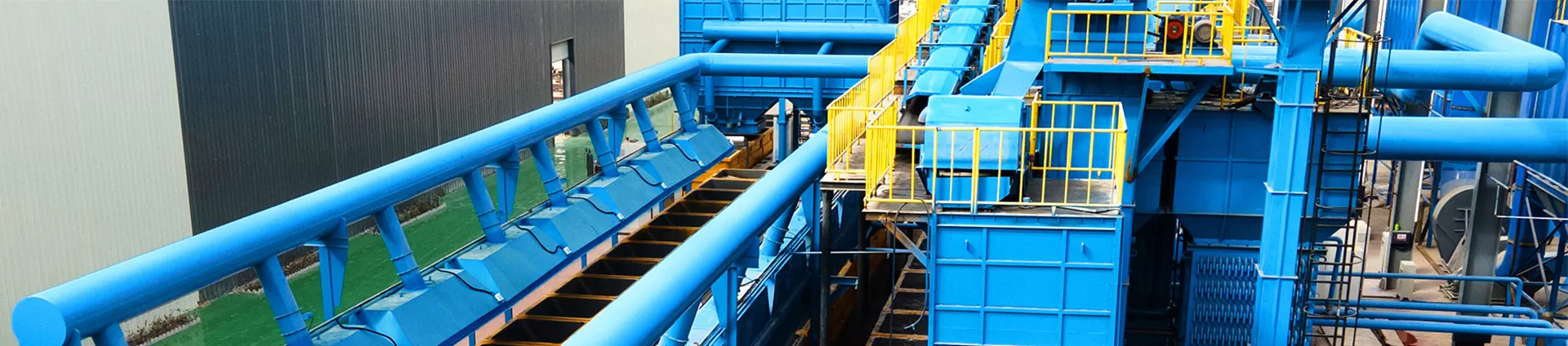
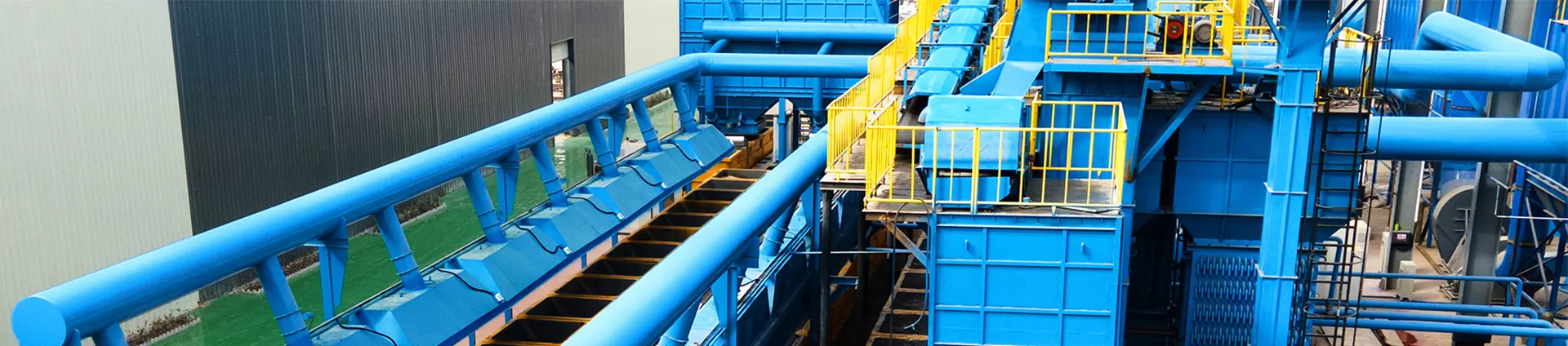
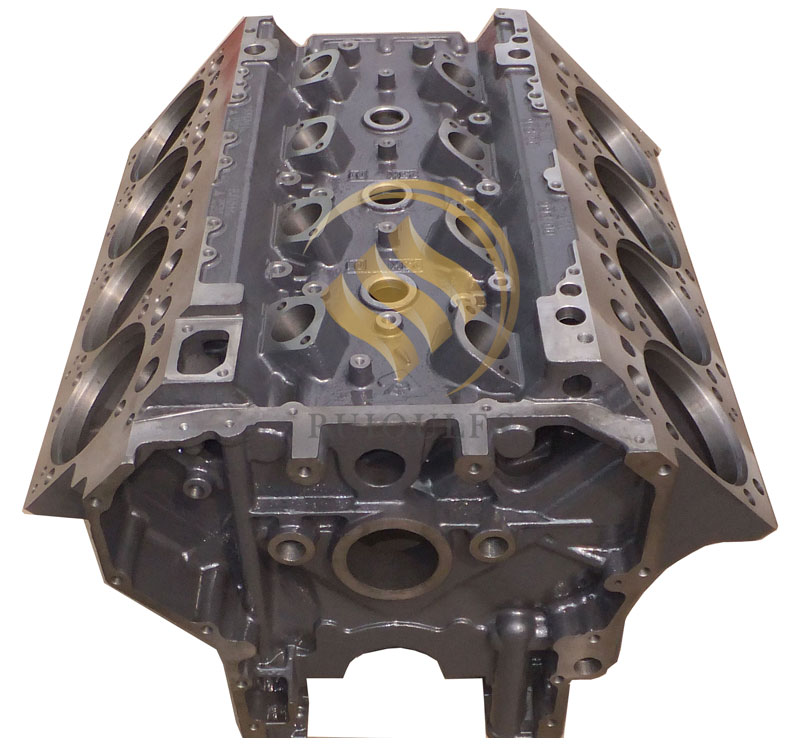
For reference, product images and factory visuals are often used by buyers to verify structure and real build quality:
Foundries usually compare these two machines because their production pain points are different:
In practical terms, the choice is about motion path and plant layout. A bottom-flip turnover machine rotates the flask around a lower support point, which can be beneficial when the center of gravity must stay low and the mold needs a controlled path. A side-flip turnover machine rotates around a lateral axis, which can be advantageous when space is tight and the line needs easier access from the side. Both can be used in sand casting equipment, flask transfer systems, and automatic molding lines, but their performance differs in clamp force distribution, footprint, and integration complexity.
| Comparison Item | Bottom-Flip Turnover Machine | Side-Flip Turnover Machine |
|---|---|---|
| Rotation Axis | Lower axis / bottom-supported flip | Horizontal side axis / lateral flip |
| Typical Application | Heavier flasks, stable mold inversion, controlled transfer | Compact lines, space-constrained workshops, flexible station layout |
| Footprint | Usually larger due to base structure | Usually smaller and easier to place |
| Load Stability | Very high; lower center-of-gravity path helps stability | High, but requires careful balancing for uneven loads |
| Cycle Time | Typically 45–70 seconds depending on load and control system | Typically 40–65 seconds depending on load and control system |
| Clamping Requirement | Higher clamping precision needed for stable bottom support | High lateral clamping accuracy required to prevent slip |
| Maintenance Focus | Hydraulic cylinder sealing, pivot wear, base alignment | Side bearing wear, axis alignment, guide rail condition |
| Operator Visibility | Good during loading, moderate during full inversion | Often better side access for inspection and maintenance |
| Automation Integration | Strong fit with heavy-duty molding lines and conveyor transfer | Strong fit with compact cells and semi-automated stations |
| Best For | Foundries prioritizing load stability and heavier molds | Foundries prioritizing layout efficiency and station flexibility |
The bottom-flip design is often selected when the foundry needs stable inversion of heavy flasks. In many turnover machine for foundry projects, this style is favored because the rotation path tends to keep the mold more centered during the flip. That matters when the flask contains fragile sand cores or when the molding process has tight tolerance requirements. Professional buyers often look at hydraulic pressure, clamping synchronization, and rotation angle accuracy. In a 2024 customer case from a ductile iron plant, a bottom-flip machine reduced mold handling variance from 14 mm to 4 mm measured at the parting line after flipping, which helped cut downstream correction work by 31%.
If your flasks regularly exceed 500 kg, the bottom-flip design can be more forgiving because the load is guided through a lower and more centralized path. This is especially useful for heavy flask turnover machine installations in engine block, valve body, and large pipe fitting production. Plants with frequent tool changes also like the repeatability of a bottom-supported system. Ruiou’s turnover equipment is often evaluated in these scenarios because buyers want a machine with predictable motion control and low deviation between cycles.
In sand casting, the quality issue is not just “can it flip?” but “can it flip without disturbing the green sand compactness or core position?” A bottom-flip machine can help reduce lateral shock during inversion. This can support a lower defect rate in the following areas:
From a line-efficiency view, if a plant runs 480 flasks per shift and reduces rework by 1.5%, that is about 7 fewer problem flasks per shift. Over 300 working days, that is a meaningful reduction in wasted labor and scrap handling.
Side-flip machines are often chosen by foundries where floor space is limited or where the production cell needs side access for loading, inspection, and maintenance. The side-axis motion can work well in a modular setup, especially when the equipment is placed near a conveyor, robot gripper, or manual loading position. In a small-to-medium gray iron foundry case, switching from manual handling to a side-flip station reduced operator travel distance by 42% and shortened setup changes from 18 minutes to 11 minutes per batch.
If the plant layout is narrow, a side-flip machine may be easier to install because it does not always require the same base depth as a bottom-flip unit. This makes it suitable for compact turnover machine projects, retrofits, and semi-automatic molding shops. For factories that need to preserve aisle width for fork trucks or mobile ladles, the side-flip option can reduce interference in the work area.
One of the practical advantages of a side-flip system is accessibility. Maintenance staff can inspect bearings, guides, sensors, and hydraulic lines from the side more easily in many layouts. That can reduce mean time to repair. In one customer plant, bearing inspection time dropped from 35 minutes to 18 minutes after replacing a legacy flipper with a side-access arrangement. For operations managers, that matters because downtime costs can exceed the purchase price difference within a year if the line is running at high utilization.
Choose bottom-flip if your main problems are heavy loads, unstable mold movement, and high scrap cost after inversion. This is common in large sand mold operations, casting lines with wide flasks, and plants using automated transfer to downstream processes. It is also a strong option when you need a foundry flask turnover machine that can maintain consistent center-of-gravity control in repeated cycles. If you are running 2–3 shifts, the durability of the base structure and hydraulic system becomes a major selection factor.
Choose side-flip if your main challenge is layout. Many workshops do not have the floor depth for a large base structure, or they need to share the same station for loading, inspection, and discharge. Side-flip equipment is often better in retrofit projects and smaller foundries where production volumes are moderate and changeovers are frequent. For those users, the key metric is not maximum load only; it is how efficiently the machine fits into the line.
Price differences are usually driven by structure, hydraulic configuration, load rating, and control system level. In market quotations, a standard side-flip unit may appear 8%–15% lower in initial cost than a heavy-duty bottom-flip model, mainly because the base structure and load-bearing frame can be simpler. However, the final decision should include total cost of ownership:
A foundry manager in a regional auto-parts plant shared a useful comparison: the side-flip machine saved about 9% at purchase, but after six months the bottom-flip alternative showed lower rework and fewer misalignment stops, which offset the initial gap. In other words, the cheaper machine is not always the lower-cost machine over 12–24 months.
In real buyer feedback, the comments tend to be practical rather than emotional. Common positive evaluations include:
Negative feedback is also useful:
Ruiou is often mentioned positively when buyers value engineering support, drawing customization, and line fit-up guidance. That matters because a turnover machine is not a standalone product; it is part of a production system.
A machinery foundry in Zhejiang with a monthly output of 8,000 castings needed to replace manual flask turning. Their molds weighed 320–680 kg, and they had frequent core-shift complaints during inversion. The team compared two options: a side-flip machine for easier installation and a bottom-flip machine for better stability. After a site review, they selected a Ruiou bottom-flip model because the line carried mixed weights and the customer wanted tighter repeatability. Results over the first 90 days were measured as follows:
The plant manager’s main comment was not “the machine is perfect,” but “we finally got a stable process.” That is the real goal of a turnover machine for foundry.
Below is a practical recommendation list based on production conditions rather than brand preference alone:
From a technical standpoint, the best option is usually the one that keeps your clamping force distribution, axis alignment, and hydraulic stability within spec for the full production cycle. If your current line fails because of overload, choose structure first; if it fails because of space, choose layout first.
Suitable for bottom-flip turnover machines: large and medium foundries, heavy flask operations, plants focused on repeatability, and users with enough floor area for a stable base structure.
Not ideal for bottom-flip: very narrow workshops, temporary production cells, and retrofit projects with strict space limits.
Suitable for side-flip turnover machines: compact workshops, semi-automatic lines, plants needing easier maintenance access, and projects where floor space is a major constraint.
Not ideal for side-flip: extremely heavy loads, highly sensitive molds requiring the most centralized motion path, and plants where top-level stability is the primary KPI.
If you are still comparing a bottom-flip turnover machine and a side-flip turnover machine, the next step should be a layout-based technical review, not a brochure-only decision. Measure your maximum flask weight, daily turn count, aisle width, and required cycle time. Then ask the supplier for a load diagram, installation footprint, hydraulic specification, and maintenance access drawing. If you want a customized recommendation, contact Ruiou with your flask dimensions, casting process, and line photos so the machine can be matched to your plant instead of forcing your plant to fit the machine.
Both can improve safety significantly compared with manual handling. Safety depends on guarding, interlocks, emergency stops, and correct clamp design. In many heavy-load cases, bottom-flip systems are selected for stability.
Cycle time depends on load, hydraulics, and control logic. In practice, both bottom-flip and side-flip machines can complete a turn in roughly 40–70 seconds when properly configured.
No. It is better for many heavy-duty and stability-focused applications, but side-flip may be more suitable when floor space and maintenance access are the main concerns.
Yes. By reducing shock, improving alignment, and controlling the inversion path, a turnover machine can lower core shift, sand loss, and parting-line mismatch. Actual improvements depend on the process and setup.
Because they want a foundry turnover solution that can be adapted to flask size, line layout, and production output, rather than a generic machine with limited fit.
In summary, the right turnover machine is the one that matches your production reality. A bottom-flip turnover machine is usually the stronger choice for heavier flasks, tighter mold stability needs, and repeatable high-volume lines. A side-flip turnover machine is often better for compact layouts, retrofit projects, and stations where easy access matters. If you are evaluating a foundry flask turnover machine, a casting mold flipping machine, or a hydraulic turnover machine for sand casting, compare not only purchase price but also floor space, cycle time, and defect reduction. For many buyers, the most valuable outcome is not only faster flipping—it is fewer stoppages, lower rework, and a process that operators can trust every day. Ruiou stands out when the goal is a tailored, production-ready solution backed by practical engineering support.
Previous: None




Copyright © Hebei Ruiou Intelligent Equipment Co., LTD. All Rights Reserved. | Sitemap | Powered by