


- Home
- Product
- About Us
- Lost Foam Casting Process
- Lost Foam Casting Video
- Success Case
- Contact Us


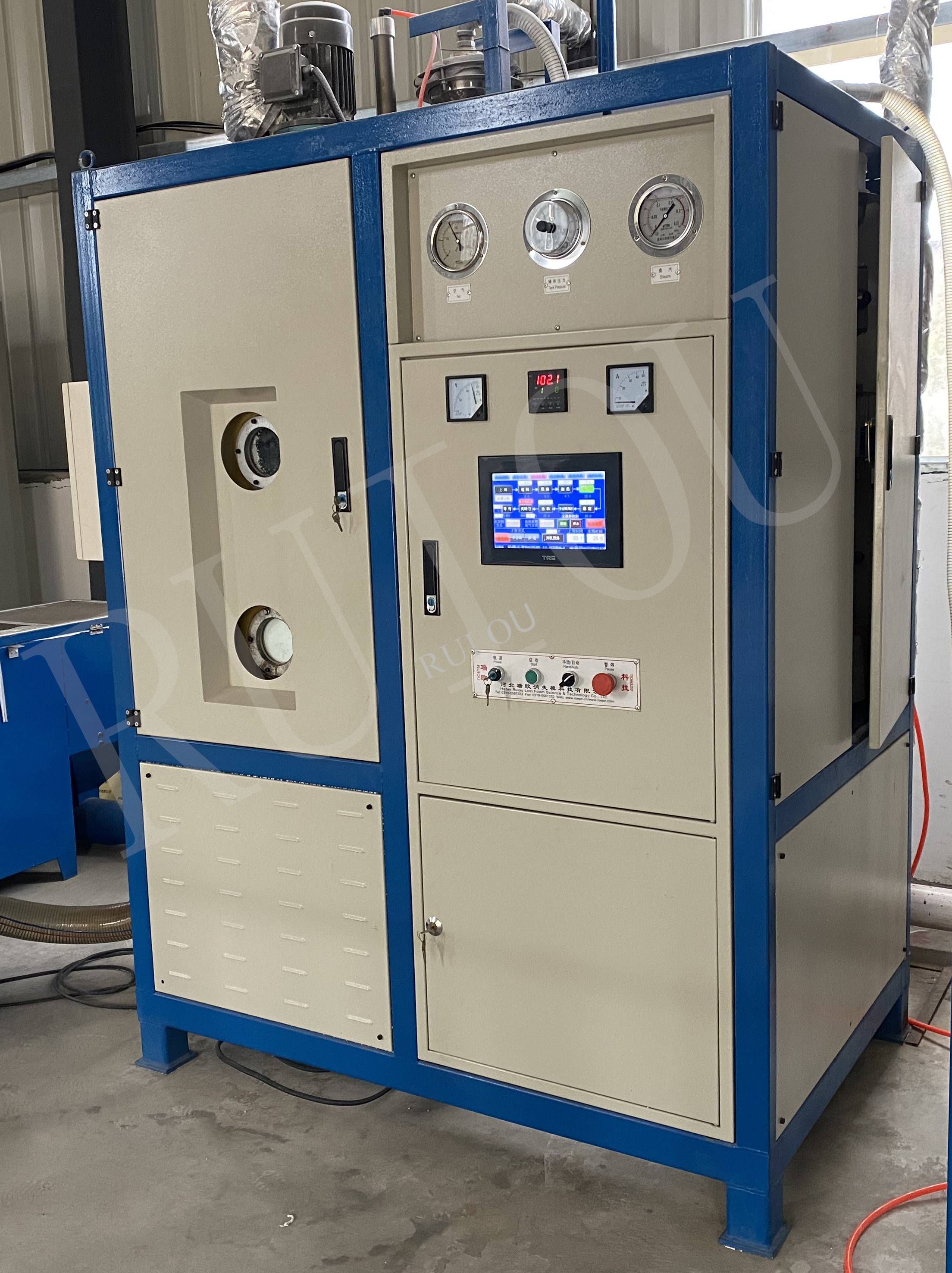

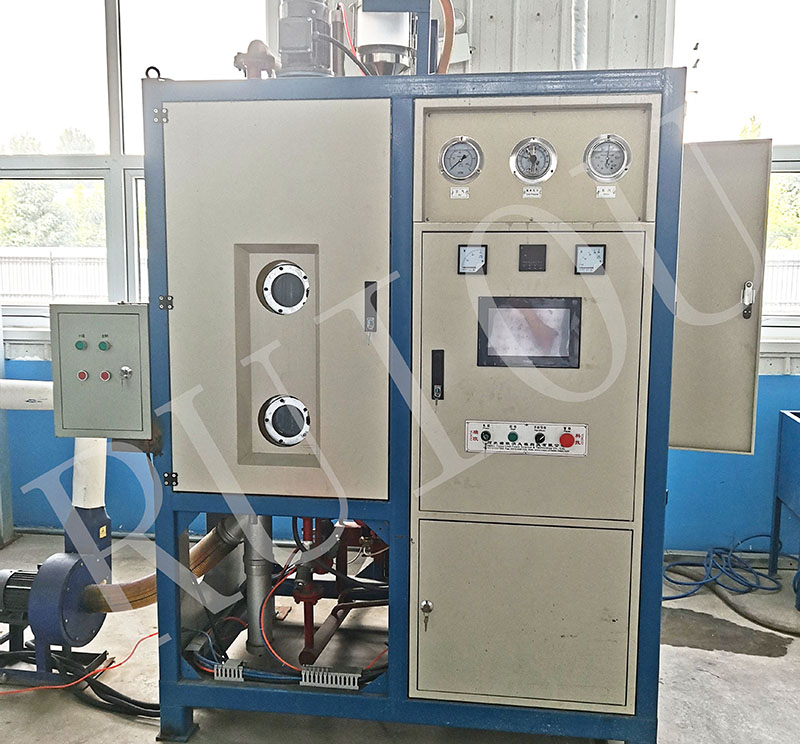
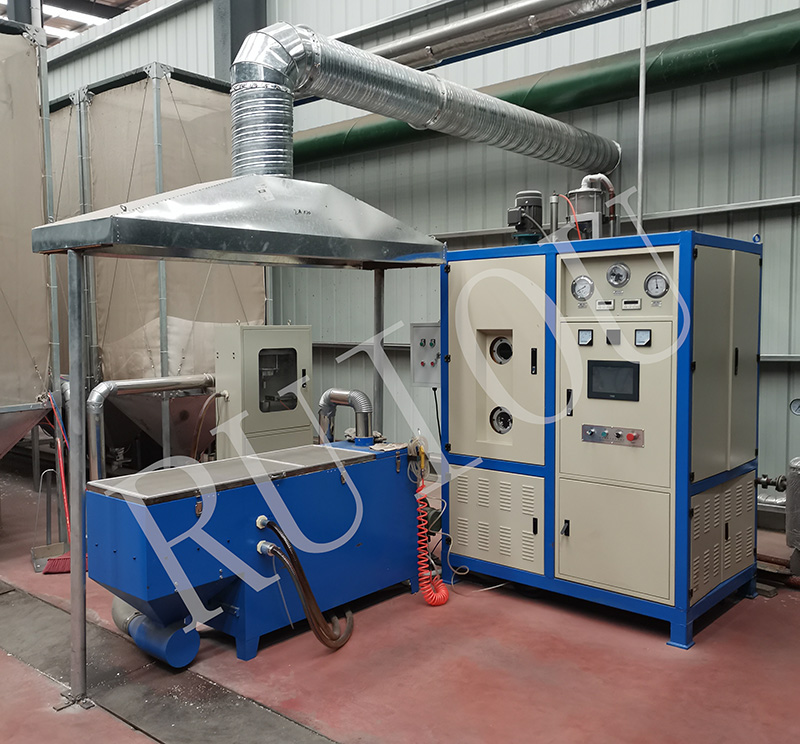
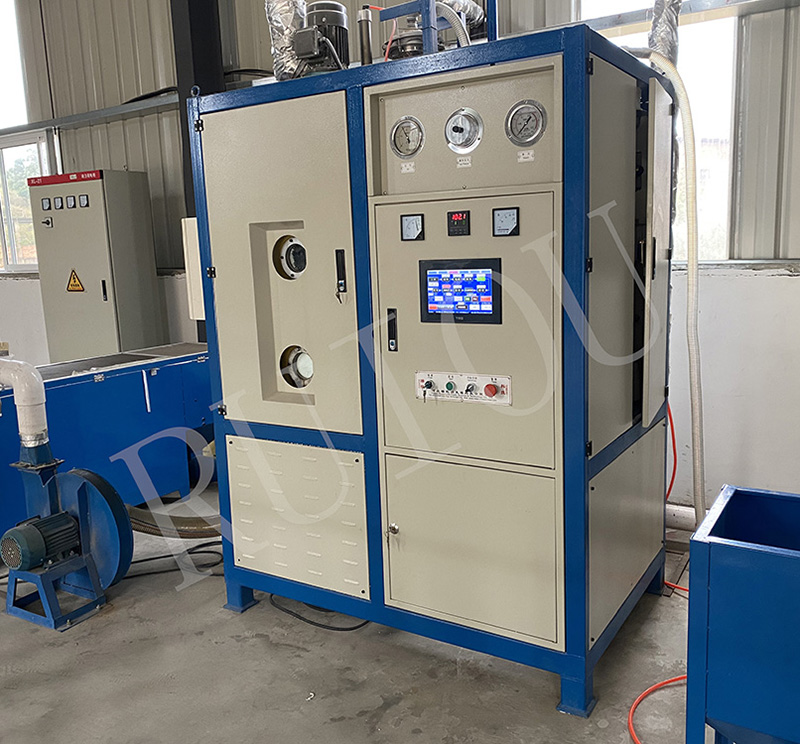
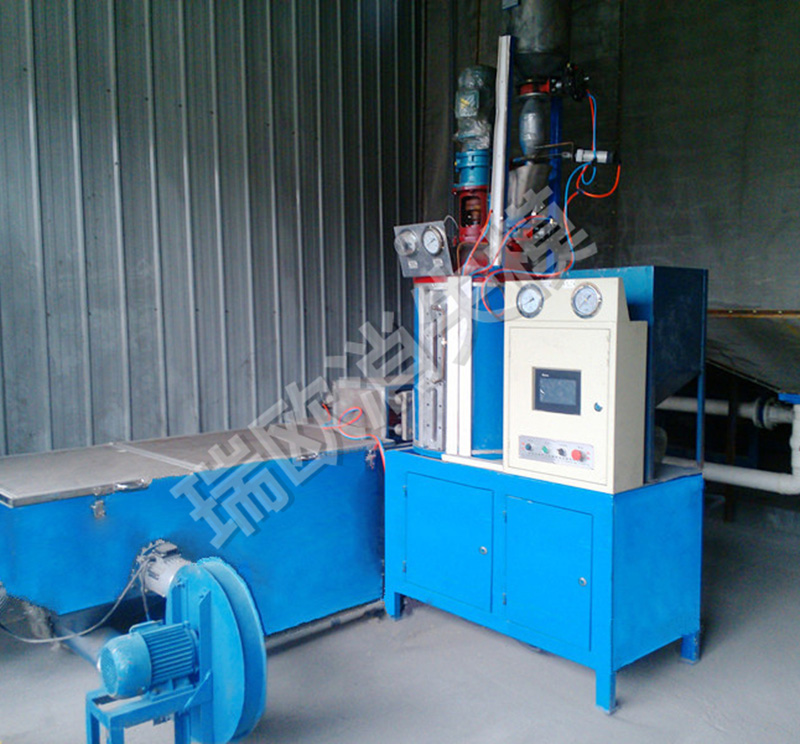

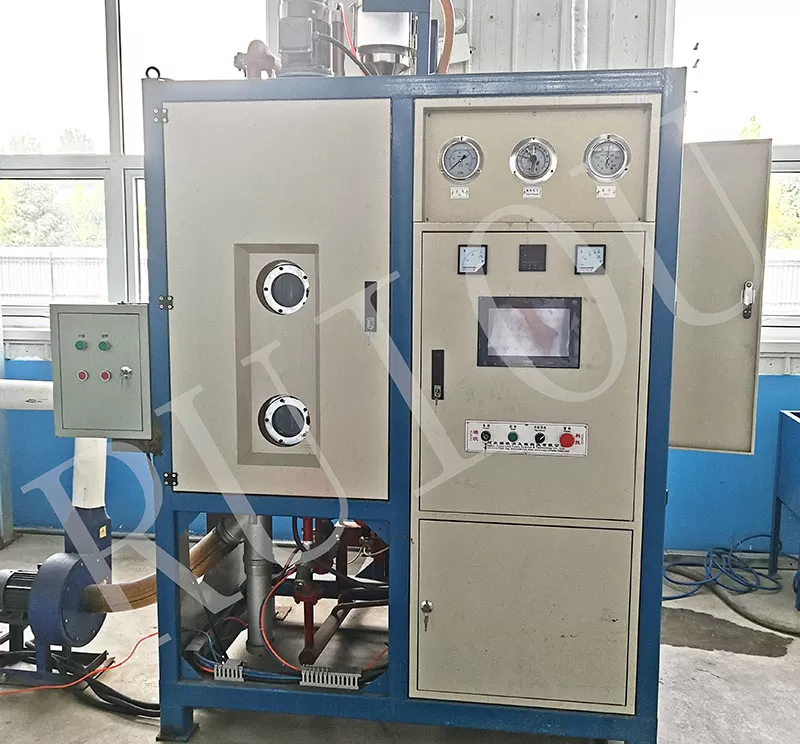
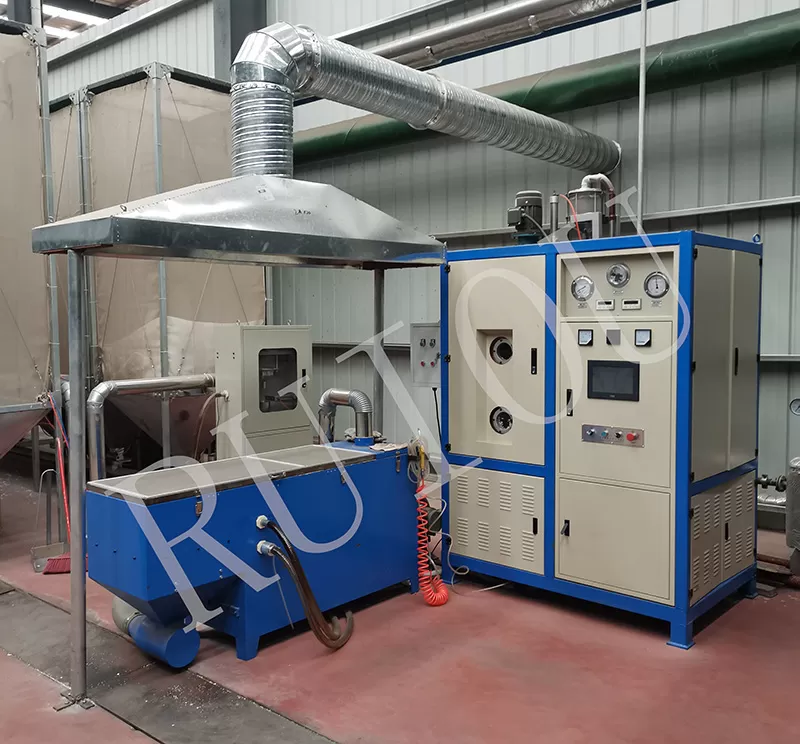
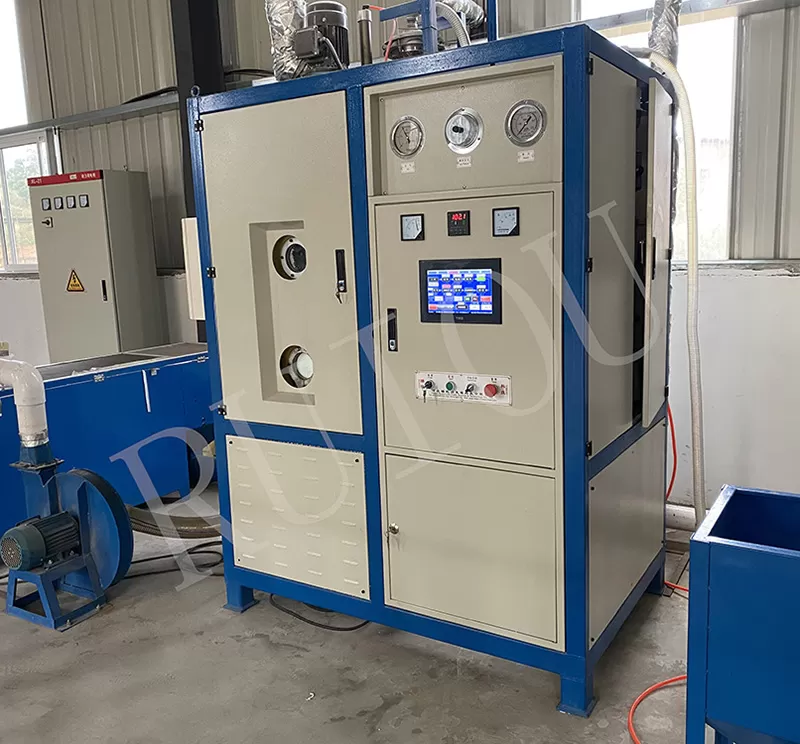
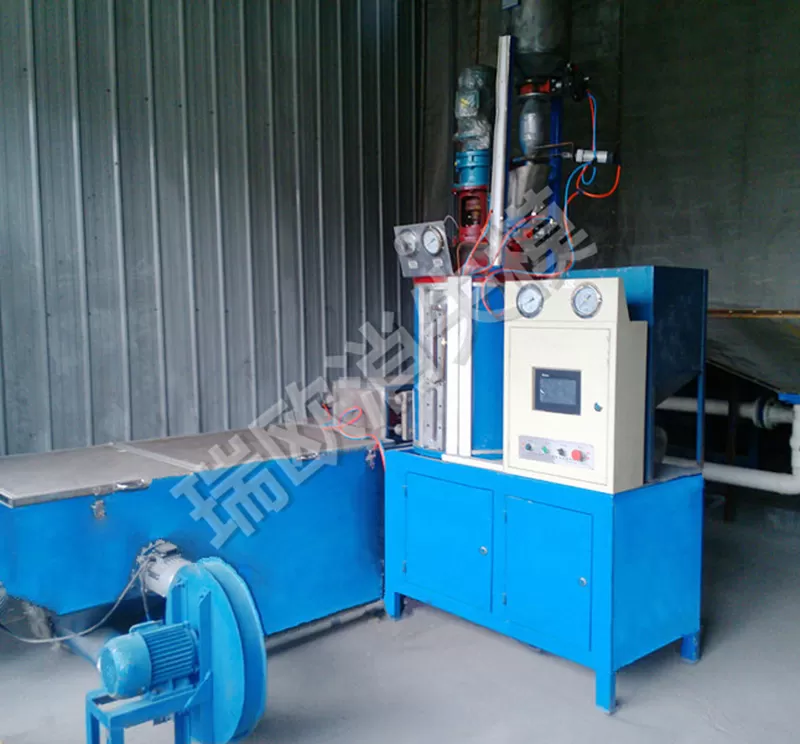
The Batch EPS pre-expander Machine with one button start and easy operation. According to process requirements, mixing time and steam heating time can be set in time. Closed constant pressure foaming in barrel, high thermal efficiency and steam saving, which saves energy by 50% compared to the continuous Pre-expander Machine. Stable density and the uniform particle. Pre expander can be applied to copolymerization of EPS, EPMMA and STMMA simultaneously.
This steam-heated batch pre-expander prepares EPS, EPMMA, and STMMA beads before aging and foam pattern molding. It combines automatic quantitative feeding, electronic weighing, closed constant-pressure steam expansion, hot-air drying, PLC control, and pneumatic conveying in one production unit — built for foundries that need stable bead density and repeatable pattern output, not the very low-density, high-volume output associated with packaging EPS equipment.
With a rated density range of 15-50 g/L, foaming deviation within ±2%, moisture content no higher than 2%, and maximum production efficiency of 25 kg/h, this machine is sized for controlled lost foam pattern production rather than bulk-volume packaging foam.
Host expansion unit — stainless steel pressure barrel with closed constant-pressure foaming chamber
PLC control system — touch screen interface with Siemens screen option; stores commonly used density parameters for quick recipe recall
Automatic weighing system — electronic weighing with ±1g deviation precision, quantitative batch foaming
Hot air drying discharge system — prevents bead agglomeration; outputs dry, free-flowing beads ready for maturation silos
Pneumatic conveying system — transfers expanded beads directly to aging/maturation storage
| Item | Unit | Parameters | |
| Bucket | Dimension | mm | φ450 × 800 |
| Capacity | m³ | 0.13 | |
| Steam | Inlet | mm | DN25 |
| Working Pressure | MPa | 0.03 ~ 0.1 | |
| Compressed Air | Inlet | mm | DN25 |
| Working Pressure | MPa | 0.4 ~ 0.8 | |
| Installed Power | 5.7 KW | ||
| Max. Production Efficiency | 25 Kg/h | ||
| Foaming Density | 15 g/L ~ 50 g/L | ||
| Moisture Content | ≤2% | ||
| Foaming Deviation | ±2% | ||
Full automation: One-button operation reduces manual intervention, keeping output consistent cycle after cycle — critical when a foundry is running the same pattern recipe across multiple shifts.
Closed constant-pressure steam expansion: Produces uniform bead size and density, which is the foundation of defect-free lost foam patterns and directly reduces scrap and rework downstream.
Repeatable, controlled output: Rated efficiency of 25 kg/h with foaming deviation held within ±2% — sized for foundries that need batch-to-batch consistency rather than raw throughput volume.
Steam energy efficiency: Closed-barrel steam expansion cuts roughly 50% of steam consumption compared to continuous pre-expander designs, lowering operating cost per ton of beads processed.
Multi-material flexibility: Handles EPS, EPMMA, and STMMA, so a single machine can cover both standard iron/steel casting patterns and specialty low-defect applications.
The core application of this EPS pre-expander machine for lost foam casting is producing high-density EPS bead patterns for metal part casting. Suitable for cast iron, cast steel, aluminum alloy, and copper alloy components in:
Automotive parts (cylinder heads, engine blocks, brackets)
Pump and valve bodies
Pipe fittings and manifolds
Agricultural and construction machinery components
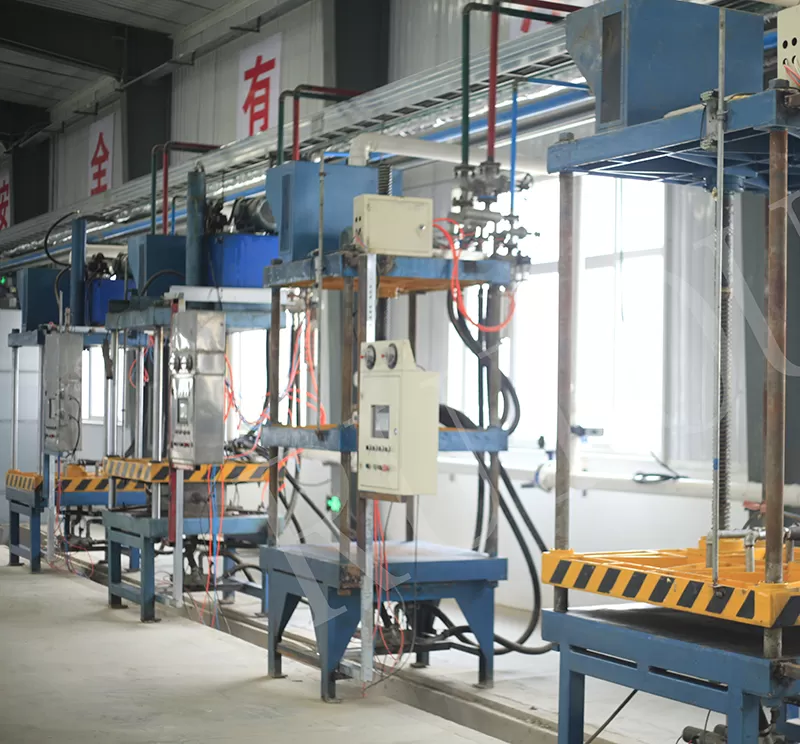
As a White Area equipment unit, this machine works alongside the hydraulic molding machine, screw molding machine, and aging silo system to form a complete foam pattern production line.
With EPMMA and STMMA compatibility, the machine supports specialty casting applications where standard EPS produces surface blemishes on critical precision parts.
An ordinary EPS pre-expander is often designed mainly for packaging, insulation board, or block production, where the priority is low expanded density and high volume. Lost foam casting requires a different balance — bead density, uniformity, moisture, and repeatability determine how well the beads fill the mold, fuse into the foam pattern, and hold pattern strength and surface condition through molding and casting.
When evaluating an EPS Pre-Expander Machine for Lost Foam Casting, procurement teams typically weigh:
Required foam pattern density and wall thickness range
Bead material and original particle size
Foam pattern molding method
Number and capacity of aging silos
Hourly bead consumption of the molding machines
Available steam pressure and supply stability
Required recipe repeatability
White Area layout and conveying distance
Steam supply stability is the deciding factor for this model specifically — it's the input that determines whether the steam configuration or the electric-assisted configuration is the better fit for a given plant.
| Selection Point | Steam Model | Electric-and-Steam Model |
|---|---|---|
| Main heating arrangement | External steam supplied to the expansion barrel | Electromagnetic heating combined with steam |
| Best suited for | Foundries with a stable centralized steam source | Projects that prefer an electrically assisted heating configuration |
| Main purchasing focus | Steam pressure, density range, output, and batch repeatability | Electrical capacity, steam conditions, and combined heating arrangement |
| Product-page focus | Closed constant-pressure steam expansion and hot-air drying | Electromagnetic heating and automatic/manual operating modes |
| Utility planning | Requires confirmation of external steam quality and stability | Requires confirmation of both electrical and steam conditions |
Your plant has a stable centralized steam source
The required expanded density is within 15–50 g/L
Maximum rated output around 25 kg/h matches your production demand
Repeatable batch production is more important than very high-volume output
Hot-air drying is required after expansion
Expanded beads must be pneumatically transferred to aging silos
The machine will be integrated into a complete LFC White Area
The pre-expander is the first key production unit in the foam pattern manufacturing process. It prepares polymer beads before they are matured and molded into foam patterns.
Typical White Area workflow:
Raw EPS / EPMMA / STMMA Beads → Pre-Expansion → Hot-Air Drying → EPS Aging Silo → Foam Pattern Molding → Pattern Cutting or Assembly
After pre-expansion, the beads can be transferred to an EPS Aging Silo for pressure balancing, moisture reduction, and stabilization before molding.
Matured beads can then be processed by a Screw Molding Machine or Hydraulic Molding Machine, depending on the foam pattern design, mold structure, production volume, and automation requirement.
RUIOU can support pre-expander selection as part of a complete Lost Foam Casting White Area project.
For new LFC lines, the pre-expander can be coordinated with:
For existing production lines, the machine can be configured around the customer’s available steam source, current aging silo, molding equipment, factory layout, and automation interface.
Q: What EPS bead density should I target for lost foam casting?
A: For most LFC applications, target 18–25 g/L. Complex thin-wall castings may require 30–50 g/L. This EPS Pre-Expander Machine for Lost Foam Casting covers the full 15–50 g/L range with the same hardware.
Q: How long must beads mature before use in the molding machine?
A: Typically 8–12 hours in aging silos under ambient conditions. The integrated hot air drying system reduces moisture content at discharge to ≤2%, which can shorten effective maturation time compared to wet-discharge machines.
Q: Can I use this machine for standard EPS packaging foam?
A: Yes, but this machine is optimized for high-density LFC applications. If your primary need is low-density packaging foam, a different model may offer better cost-efficiency.
Q: What is the difference between this batch pre-expander and a continuous pre-expander?
A: The batch type uses closed constant-pressure foaming for precise density control, making it ideal for LFC. Continuous types are open-system, higher volume, but cannot reliably achieve 20+ g/L density with the uniformity LFC requires.
Q: Does the machine support Siemens PLC?
A: Yes. The standard system uses a leading Chinese-brand control system; a Siemens screen is available as an option.
Q: What's the actual throughput I should plan for?
A: Rated max. production efficiency is 25 Kg/h at standard settings. Actual throughput depends on your target foaming density — lower densities (larger bead volume per kg) generally process faster than the high-density settings (30–50 g/L) used for precision thin-wall patterns.
Looking for a reliable, fully automated pre-expansion system for your Lost Foam Casting (LFC) operation? Contact us today for a customized quote and learn more about our steam pre-expansion equipment tailored for foam molding applications.
For more informations pls contact us!

What Is the Cost of a Lost Foam Casting Plant?
The Advantages and Disadvantages of Lost Foam Casting
Unlocking the Secrets of Lost Foam Casting
Material Selection for Lost Foam Casting




Copyright © Hebei Ruiou Intelligent Equipment Co., LTD. All Rights Reserved. | Sitemap | Powered by